
An aromatherapy feature can attract retail interest while leaving a critical question unanswered: where does the oil go? For brands and importers, that distinction belongs in product approval, packaging and after-sales instructions before an order is released.
Essential oils should only be used through the arrangement expressly permitted for the exact facial-steamer version. A designated aroma-pad compartment does not authorize adding oil to the main water tank. Buyers should verify the accessory, permitted formulation, loading instructions, material compatibility and cleaning method before approving an aromatherapy claim. If those conditions remain unclear, keep the claim narrower and request supporting evidence.
Does Aromatherapy Support Mean Oil Can Go in the Water Tank?
No. “Supports aromatherapy” is incomplete unless it identifies the permitted location and method. The water tank, a removable aroma pad and a separate holder perform different roles. Treating them as interchangeable creates an instruction problem before any technical failure occurs.
For procurement, separate three questions:
- Does the supplied version include a designated aroma accessory?
- What may be placed on that accessory, and under what instructions?
- What must remain outside the main water tank?
A product photograph may help locate a holder. It cannot establish which oil formulation has been evaluated, how much may be used or whether a replacement pad is suitable. Request those details for the version being purchased.
What the KD2331A and KD33S Examples Establish
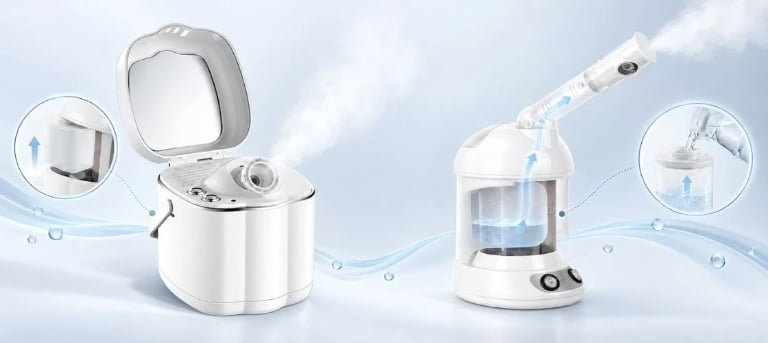
The KD2331A facial steamer is described with a separate aroma-pad compartment. Its published instructions prohibit adding essential oils and other substances directly to the water tank. The reviewed KD2331A G0 manual also distinguishes oil applied to an aroma pad from water added to the tank.
The KD33S long-tube facial steamer likewise identifies a designated aroma-pad compartment and separates that use from the water-tank system.
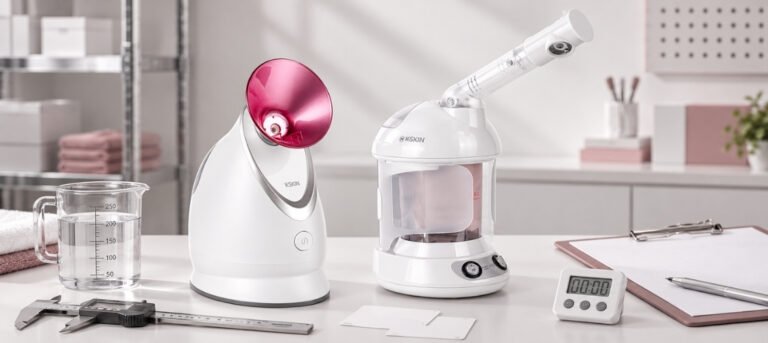
These examples establish a placement distinction, not blanket approval for every oil, pad or market configuration. Before ordering either model, obtain the applicable manual and accessory specification for the supplied version. Do not transfer instructions between the two models because both mention aromatherapy.

What Should Buyers Verify About the Aroma Structure?
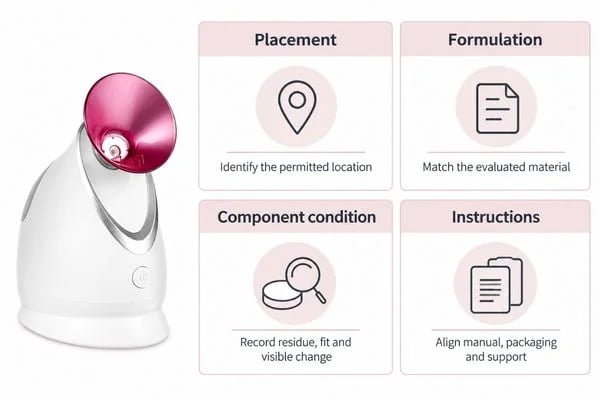
Begin with the actual sample and matching instructions. Ask the supplier to identify the filling opening, aroma holder, pad position and permitted removal procedure. Record the arrangement with photographs rather than relying on a generic description such as “oil compatible.”
Then review how a user encounters those parts. Can the person distinguish the water-filling opening from the aroma location? Does the holder remain correctly seated? Does the proposed pad fit without obstructing the intended outlet? Can the accessory be handled and cleaned according to the instructions?
These are evaluation questions, not claims that a particular design has failed.
| Item to verify | Evidence to request | Decision boundary |
|---|---|---|
| Intended aroma location | Matching manual, sample and labeled photograph | A holder does not authorize tank additives |
| Pad specification | Dimensions, material and replacement requirements | Similar-looking pads are not automatically equivalent |
| Permitted formulation | Identified oil or formulation and documented use limits | Approval of one formulation does not cover all oils |
| Loading method | Clear placement and quantity instructions | A marketing image cannot define the permitted amount |
| Cleaning access | Demonstrated procedure for the approved accessory | Accessibility alone does not prove cleaning effectiveness |
| Version identification | Model, revision, electrical version and accessory list | Evidence must match the order configuration |
A useful sample review ends with an identifiable configuration. “Same as the showroom sample” is difficult to control if the pad, holder or instructions later change.
Do Not Confuse a Material Name With Compatibility Evidence
A component list may identify plastics or other materials, but that list is not a finished-product compatibility result. Ask which parts the formulation can contact during permitted loading, operation, removal and cleaning.
The supplier's evaluation should identify the actual material grade and component where relevant, the formulation, contact conditions and acceptance criteria. Potential observations to record include surface changes, cracking, seal condition, residue and changes in fit. These are checks to define, not an assertion that every oil causes those effects.
If the supplier has only a general material statement, keep the conclusion at that level. Do not turn it into a claim that the complete appliance has passed essential oil compatibility testing.
Which Risks Belong in the Evaluation Plan?
The procurement risk is approving a broader use than the evidence supports. Even with a designated accessory, review the complete arrangement.
Residue, Cleaning and Carryover
The reviewed KD2331A instructions call for cleaning after use to avoid oil and other residue accumulating. For an aroma feature, buyers should therefore request a cleaning method that addresses the accessory as well as the appliance's normal water handling.
Check what remains on the pad holder and accessible surrounding surfaces after the approved use cycle. Record whether the specified cleaning method removes visible residue and whether odor remains after the defined cleaning and drying steps. Odor observations should have stated review conditions; they are not chemical exposure measurements.
Keep aroma-residue review separate from mineral-scale maintenance. A descaling procedure should not be assumed to remove oil residue, and an accessory-cleaning method should not be copied into the main water path without approval. This article does not prescribe a universal solvent, acid, detergent or cleaning frequency.
Output, Leakage and Component Condition
Compare the approved aroma arrangement with the same product's defined water-only baseline. Observe output continuity, unexpected droplets, leakage, accessory seating and visible component condition using the agreed method.
If output changes, investigate the cause before attributing it to oil. Incorrect assembly, the water condition, an accessory variation or another product issue may also need examination. A complaint mentioning fragrance is not, by itself, a diagnosis.
Do not put oil into a water-only tank as an informal buyer experiment. Any evaluation of prohibited use belongs in a separately approved engineering procedure with appropriate safeguards. It must not become a user instruction or a demonstration of normal operation.
Unsupported Retail Claims
A compartment and a pleasant fragrance do not prove therapeutic benefit, improved skin outcomes or suitability for every user. Keep the product proposition tied to its documented design and permitted use.
Review artwork as well as text. An image showing oil poured into the main tank can contradict a written warning elsewhere in the package. A picture of several oils may also imply a compatibility range that the project has not established.
How Should an Aroma-Feature Sample Review Be Structured?
Use a documented project procedure rather than a universal number of drops or operating cycles. The purpose is to establish what the proposed commercial version supports and which questions remain open.
Fix the Configuration Before Testing
Record the model, revision, electrical configuration, sample identity, holder and pad specification. Identify the proposed formulation, its supplier reference and any relevant batch information. State the permitted amount, placement, water specification and operating conditions supplied for the evaluation.
If a manual uses wording such as “a few drops,” ask how the project will control and communicate the permitted loading. Do not convert that wording into a precise volume without evidence. If the formulation or loading limits are unresolved, hold that part of the aroma-use approval while continuing other sample checks.
Compare Baseline and Intended Use
A focused evaluation can follow this sequence:
- Inspect and photograph the sample, pad and holder before use.
- Establish the defined water-only baseline under the agreed conditions.
- Evaluate the permitted aroma arrangement using the documented formulation and loading method.
- Record output behavior, droplets, leakage, accessory fit and accessible surface condition.
- Apply the approved cooling, removal, cleaning and drying procedure.
- Reinspect the relevant parts and record residue, odor observations and any changes.
- Repeat according to the project's documented validation plan and retain results against the sample identity.
The engineering plan should define sample quantity, cycle count, measurement methods and acceptance limits before results are judged. A brief demonstration can reveal questions; it does not establish long-term compatibility or represent every production batch.
If the formulation, pad, material or holder changes, ask which conclusions remain applicable and which checks need repeating. Connect that review to the project's manufacturing and quality controls so that an approved accessory is not replaced without assessing the effect.
Ask What Each Report Actually Covers
Read the method and scope rather than treating the presence of a certificate as approval for an aroma claim. The relevant question is whether the proposed formulation, loading arrangement and product version were included in the evidence being relied on.
A report that does not evaluate those conditions cannot close that particular question. Likewise, a completed test on one defined combination should not be described as approval for all essential oils. Keep technical findings, supplier statements and buyer decisions separate in the approval record.

How Should Instructions and After-Sales Support Match the Design?
Approve the retail instructions with the product, not after the order configuration is fixed. The manual, quick-start guide, packaging illustrations, product listing and support script should describe the same placement rule.
For a version that prohibits tank additives, the distinction should be visible where users decide how to fill and prepare the appliance. Do not rely on a warning buried far from an illustration suggesting a different method.
A practical document review should confirm:
- The correct water-filling location and permitted water specification.
- The designated aroma location, if supported by that version.
- The approved pad and replacement requirements.
- The permitted formulation and loading instructions, where established.
- Cooling, disconnection and handling precautions from the applicable manual.
- Accessory removal, cleaning, drying and replacement instructions.
- Prohibited additives and actions that require service support.
These points need to survive translation and retailer editing. Request a final artwork check whenever a distributor changes an illustration or shortens the instructions.
Investigate Complaints Without Presuming Misuse
After-sales intake should capture what happened before assigning responsibility. Obtain the model and version, the reported substance, where it was placed, the accessory used, the operating stage and the cleaning history. Request appropriate photographs without asking a user to dismantle the appliance or repeat an unsafe condition.
| Reported situation | Information to collect | Review action |
|---|---|---|
| Oil reportedly added to the tank | Instructions supplied, placement details and product version | Follow the approved service route; examine both product and communication issues |
| Persistent fragrance after cleaning | Formulation, pad history and cleaning method | Review residue handling and whether the approved process was followed |
| Output changes during aroma use | Baseline behavior, accessory fit and operating conditions | Investigate the cause rather than assuming contamination |
| Holder damage or a poor-fitting replacement | Accessory identity, photographs and purchase history | Compare the part with the controlled specification |
| Listing contradicts the manual | Exact listing image or wording and manual revision | Correct the inconsistent customer information |
Warranty handling should follow the applicable terms and case evidence. The presence of oil should not automatically settle the cause of a failure or justify a blanket refusal of support.
What Should Buyers Confirm Before Order Approval?
Use the following checklist to close the aroma-related part of the project:
- Confirm the exact model, revision and included aroma accessory.
- Match the water-tank restriction across the sample instructions and retail materials.
- Obtain the permitted formulation and loading conditions, or narrow the claim until they are defined.
- Review compatibility evidence for the actual parts and use conditions.
- Confirm the cleaning method and replacement-pad requirements.
- Retain sample results, deviations and unresolved questions with an assigned reviewer.
- Check packaging and listing images for implied tank filling or unsupported benefits.
- Agree on the information service teams should collect when a complaint occurs.
- Define which product or accessory changes require renewed review.
Keep the commercial description within the documented scope while the supplier resolves any remaining aroma-use questions.

Frequently Asked Questions
Does a Separate Aroma Compartment Approve Every Essential Oil?
No. It identifies the intended location, not a universal formulation approval. Buyers still need the permitted use conditions and evidence appropriate to the proposed oil, pad and product version.
Can an Oil Labeled Water-Soluble Be Added to the Tank?
That description does not override the appliance instructions. Do not authorize tank use unless the exact product's approved instructions and supporting evaluation permit the proposed formulation and method.
Can Buyers Source Replacement Aroma Pads Independently?
Treat a different pad as a proposed component change. Confirm its specification, fit and suitability for the permitted use with the product supplier before including it in the commercial offer.
Is a Stronger Fragrance Evidence of Better Performance?
Fragrance intensity is not proof of material compatibility, safe exposure or improved beauty results. Define any sensory review separately from appliance performance checks, and avoid turning preference into an unsupported product claim.
Should the Same Aroma Instructions Be Used Across a Steamer Range?
Only where their applicability has been established for each version. Similar product names, housing shapes or marketing descriptions do not prove identical holders, pads, water paths or approved use conditions.
Conclusion
For buyers, the essential-oil question is a configuration and evidence decision: identify the permitted location, control the accessory and formulation, verify the cleaning method and keep retail instructions aligned. A separate aroma feature does not authorize adding oil to the main water tank.
When reviewing K·SKIN's facial steamer platforms, request the manual, accessory details and evaluation scope for the intended version. Approve the aroma proposition only as far as those records support it, and carry the same boundaries into packaging and after-sales support.