If you buy hair tools for a brand or retail range, a photograph of a clamp-shaped iron leaves one expensive question unanswered. What will customers expect to happen when they close it around their hair?
A steam straightener shapes a section of hair between heated plates and uses water to supply steam during styling. An ultrasonic hair care iron is designed for a care routine that can involve a compatible lotion applied to the hair. Choose the steam format for a straightening brief and the ultrasonic format when the device has a defined job alongside a care product.
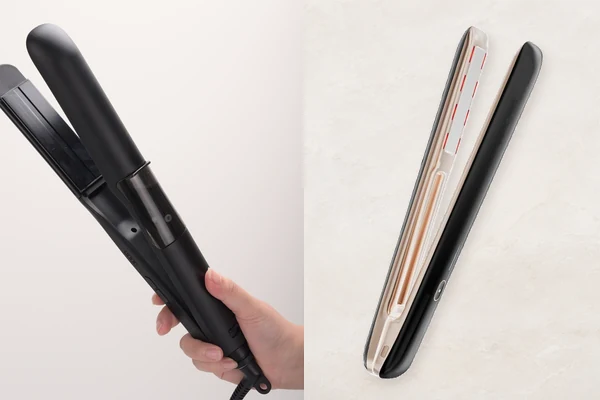
The costly mix-up can happen before anyone plugs in a sample. An importer requests a “hair iron,” receives two quotations and puts them side by side. Both include a hinged device, packaging and instructions. One quote makes sense on its own. The other may be missing the very thing that makes the device useful to that brand: an agreed companion lotion and a clear way to use the two together. A lower unit price tells the buyer little until that difference is understood.
There is a second cost. A shopper who finds an ultrasonic care iron under “hair straighteners” has every reason to expect a straighter finish. If the device was developed for a care routine, it can operate exactly as designed and still disappoint that shopper. Getting the category right protects the meaning of the product long after the purchase order is signed.
What Is a Steam Straightener?
In this comparison, a steam straightener is a flat iron with a water reservoir, a steam system and two heated styling plates. The user places a section of hair between the plates, closes the arms and draws the iron along the section. The plates hold and heat the hair during the pass. Steam adds a function to that familiar styling movement. A steam straightening brush is a separate format: hair travels through an open brush face.
Our steam straightening brush vs steam flat iron comparison examines this distinction using the KD880 and KD258. It covers how hair meets each working surface, how steam is activated and what buyers should check when comparing samples.
For a brand that already sells flat irons, the appeal is continuity. Customers can recognize what the product is for and how to hold it. The buying question is whether the steam version preserves what they value in the existing iron. A hinge that feels awkward, a plate edge that catches the ends or a reservoir that is difficult to refit can matter more in use than another temperature setting on the specification sheet.
There is a simple way to make an initial review more informative. Bring the existing iron and use comparable, separately prepared hair sections under the conditions permitted for each tool. Look first at the feel of taking up and releasing the section. Then consider the extra steps the steam model introduces, from filling the reservoir to recognizing when steam is available. The sample should give the team a specific reason for adding that second SKU. A photograph of a larger cloud of steam cannot answer those handling questions.
What Is an Ultrasonic Hair Care Iron?
An ultrasonic hair care iron uses a vibrating contact plate as part of a hair-care routine. The hinged form gives the user a means of guiding a prepared section between the working surfaces. For a lotion-based model, the routine starts before the device touches the hair: the compatible product is applied as directed, then the section is guided through the plates.
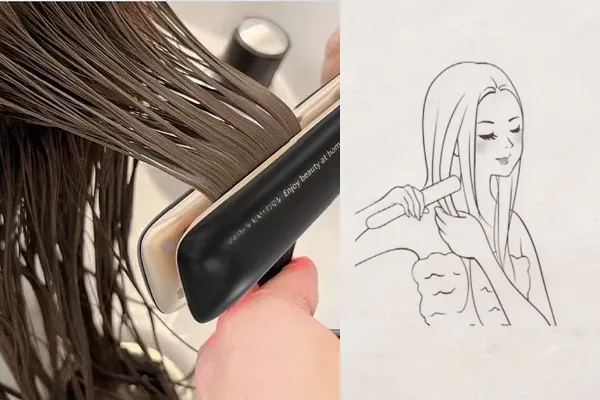
The word “iron” describes a recognizable shape, but it leaves open what the surfaces do. Some buyers also encounter the term “cold iron.” Neither label tells you the temperature of a particular contact surface. The useful evidence is the model’s parts diagram and intended-use instructions. A diagram can identify an ultrasonic plate and an opposing warm plate. It cannot, by itself, establish how a formula performs on hair.
That distinction gives a hair-care brand a better first trial. Take the actual lotion proposed for the range. Check that its use falls within the device instructions, then evaluate how the prepared section moves through the plates and how readily residue comes off afterward. If the formula is still changing, retain its version with the notes. A light lotion that leaves little residue and a thicker mask from the same brand are two different compatibility questions.
There is commercial value in answering that modest question well. A brand can decide whether its customers would find a device useful alongside a product they already know. It can also decide whether buyers should receive a kit or purchase the device separately. Neither decision requires a promise about deeper penetration, permanent repair or a universal benefit across formulas.
Where Does the Liquid Go, and What Does That Change for the Order?
The easiest way to tell these two product briefs apart is to follow the liquid. In a steam flat iron, the specified water goes into the appliance. In a lotion-based ultrasonic routine, the compatible care product goes onto the hair. That one difference changes who supplies what and which instructions a customer needs.
| Buying question | Steam straightener | Ultrasonic hair care iron with a companion lotion |
|---|---|---|
| What starts the routine? | A filled reservoir and an iron ready for styling, following the model instructions | Hair prepared with a compatible care product as directed |
| What belongs in the sample review? | Plate grip, release, reservoir handling and steam activation | Formula compatibility, plate contact, handling and removal of residue |
| What needs to be clear in the quotation? | Electrical version, plug, pack contents and any agreed filling accessory | Device, charging accessories where applicable, and whether the lotion is supplied separately or included |
| What can the demonstration establish? | How the iron handles a section and how steam responds during the pass | How to apply the permitted product, guide a section and clean the contact surfaces |
The distinction becomes particularly important with a branded gift set. A bottle pictured beside a steam iron can suggest that its contents belong in the tank. Add only the water permitted by the matching instructions; a removable reservoir does not establish compatibility with fragrances, oils or lotions. Beside a care iron, a bottle can imply that the formula has been evaluated with the device and is included in the box. Decide both points before approving that photograph. It is much easier to change a sample brief than printed packaging.
What Can K·SKIN Provide for Each Project?
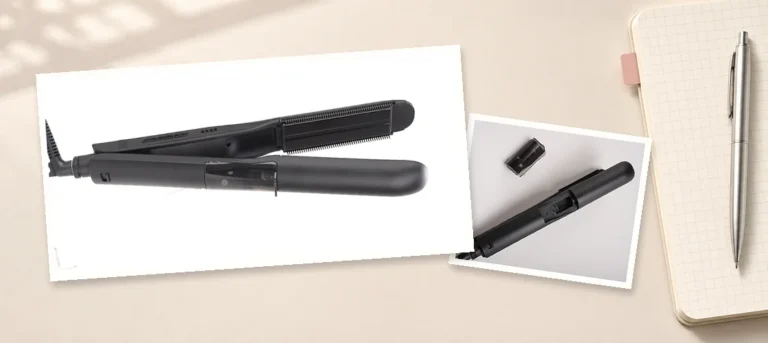
K·SKIN has a reference model for each of these briefs. Seeing them open is useful because the same closing action serves a different purpose on each one.
For a brand extending a flat iron line
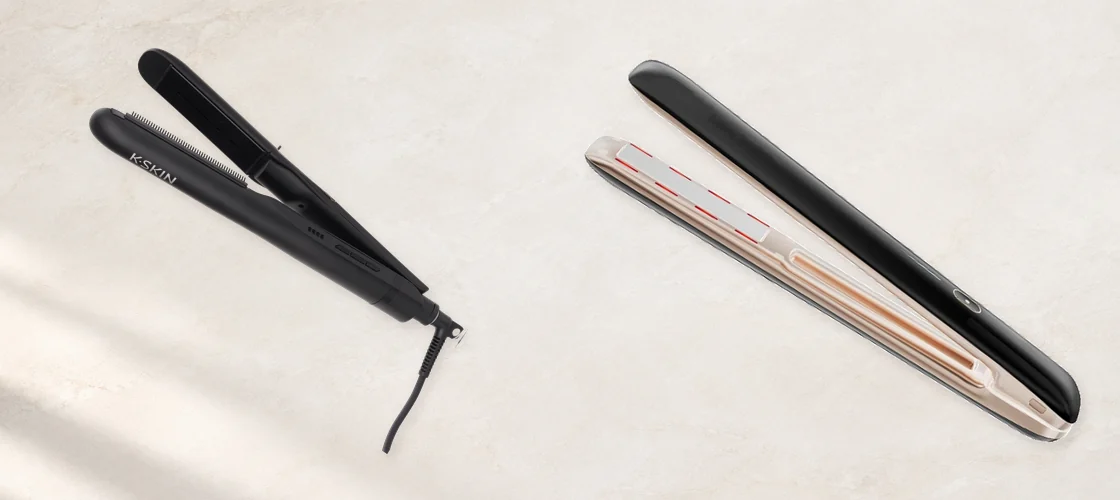
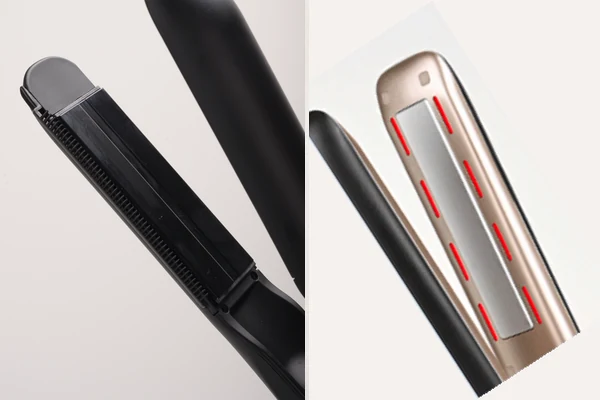
The KD258 steam flat iron has heated aluminium plates, comb teeth alongside the styling surface and a separate steam switch. Once the iron is ready and steam is enabled, closing the plates starts steam output. Opening them stops it. This is a useful detail for a buyer who sees no steam while holding the sample open. It is also a feature that can be explained accurately in one short demonstration.
The project can start with that reference sample and the market where it will be sold. K·SKIN can discuss the electrical configuration, plug, branding and retail pack against the chosen version. If the brief depends on a particular grip or release, bring the current straightener to the comparison. It gives both teams a much clearer reference than a request for a “premium feel.”
For a brand building a home hair-care offer
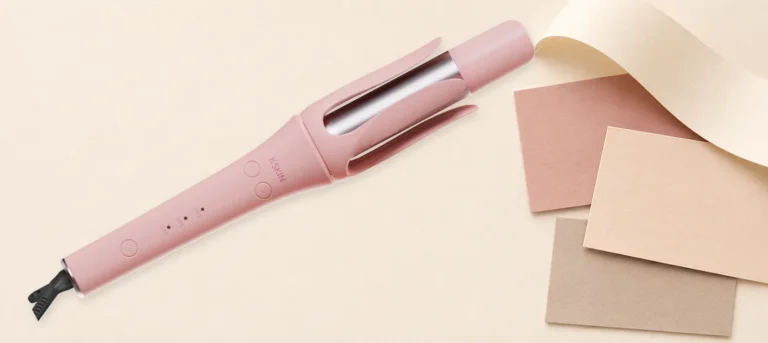
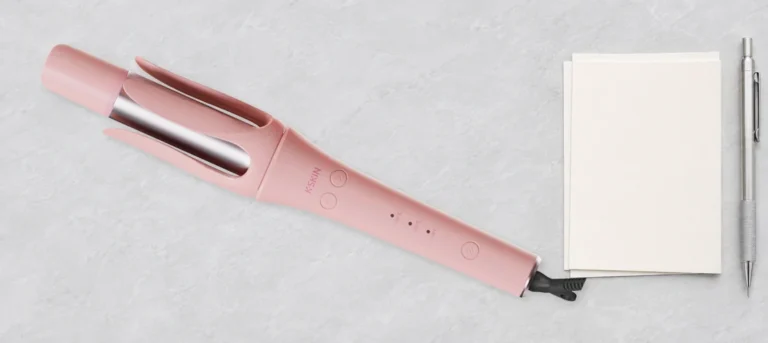
The KB168 ultrasonic hair care iron is a rechargeable device for personal home care. Its guide identifies an ultrasonic plate and a warm aluminium plate and shows a compatible lotion applied to the hair. Those details give a brand a credible way to introduce the product to a customer who has never encountered this category: show where the lotion goes, how the section passes through and what needs cleaning after use.
K·SKIN can review the device sample, charging arrangement, localized instructions and packaging requirements with the buyer. The brand brings its intended formula and the use it wants to describe. If formula compatibility or the wording of a benefit still needs evidence, that can be identified while the project is at sample stage, before the device and bottle are committed to one retail pack.
What Advantage Does That Give a Buyer?
One practical advantage of evaluating both formats with K·SKIN is that the buying team can take the same commercial question to two actual samples: “What would we be comfortable showing on the box?” The answer exposes the difference quickly. For the styling iron, a short sequence can show a section entering the plates, steam activation and release. For the care iron, the sequence needs to start earlier, with preparation of the hair. Leave that step out and even a technically accurate close-up of the device is hard for a new customer to understand.
The sample, the parts diagram and the instructions each answer a different question. The sample lets a buyer feel the grip. The diagram identifies the contact surfaces. The instructions establish how those surfaces and any liquid are intended to be used. Bringing all three into a private label review helps a buyer settle what to photograph, what belongs in the box and which wording can be carried over to the localized guide.
There is a limit to what a demonstration can settle. A visible light shows that the light came on. Fine droplets, if observed in a defined demonstration, show what happened to that liquid under those conditions. A claim that a particular formula absorbs more deeply would need evidence for the device, formula and claimed outcome. Buyers reviewing that question can refer to K·SKIN’s guide to evaluating ultrasonic hair-care demonstrations.
Which Product Should Your Brand Sample First?
Start with the product the new item will sit beside. An existing flat iron gives you a handling reference. An existing lotion gives you a formula to evaluate. If the range includes both, write down the intended use for each proposed SKU before comparing prices.
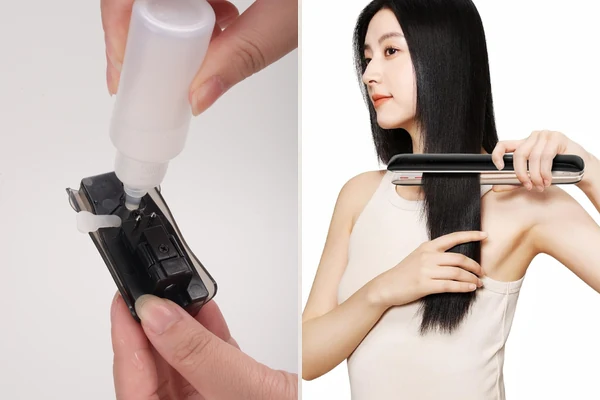
- For a styling range, start with the steam straightener if the brief calls for controlled straightening with a familiar plate technique. Compare it with the current iron and assess what the steam system adds to the experience.
- For a home-care range, start with the ultrasonic iron if there is a defined care routine and an appropriate formula to review. Decide whether the device will stand alone or accompany a named lotion.
- For a distributor considering both, request separate quotations against the intended offers. Keep the market configuration and pack contents visible. A device-only price and a complete kit price answer different purchasing questions.
Before approving either sample, the team should be able to finish one sentence in ordinary English: “A customer would pick this up when they want to ___.” If the answer still depends on technical words that never explain what someone does with the tool, the retail brief needs one more conversation.
Frequently Asked Questions
Can an ultrasonic hair care iron replace a straightener?
A care iron serves a formula-led routine. A straighter-looking section after one pass does not establish that the device can deliver the controlled styling performance expected of a heated flat iron. If straightening is the promised use, evaluate a model designed and documented for that job.
Can we use the same demonstration video for both products?
Some opening and closing shots may look similar, but the sequence needs to show each model’s actual use. A steam iron video should make filling and steam activation understandable. A care iron video should show where the permitted lotion is applied. Cropping out those steps removes the information that distinguishes the products.
Can our brand bundle its existing mask with a care iron?
Identify the exact formula first and check whether the device instructions permit the proposed use. If appropriate, assess the combination on the selected sample, including residue and cleanup. Agree the contents of the kit separately. A branded box alone says nothing about who supplies the formula.
Can a salon distributor carry a home-care device?
The sales channel and the intended use are separate decisions. A salon distributor can consider a home-care device for take-home retail. If the plan is repeated use during professional appointments, request documentation for that duty before selecting a product. The KB168 reference instructions specify personal home use.
Conclusion
A steam straightener makes sense when the customer wants to shape the hair and the brand can explain what steam adds to the styling pass. An ultrasonic care iron makes sense when a compatible formula and a defined care step give the device a useful place in the customer’s routine. The two can sit in the same range when each has a clear reason to be there.
For a sample discussion, tell K·SKIN what you already sell, where the new product will go and whether the offer includes a formula. That gives us a practical basis for reviewing the model, instructions and pack your project needs. Explore K·SKIN’s steam styling and ultrasonic hair-care options.
🌐 Website: K·SKIN Global
✉ Email: info@kskinglobal.com