If your brand has room for one steam straightener, picture the tool it will sit beside. Will it give someone who prefers a brush a new option, or extend a flat iron range that already sells?
A steam straightening brush guides hair through heated teeth in a brushing motion. A steam flat iron holds a section between two heated plates as the user draws them along its length. The brush suits a range built around brush-through styling. The iron gives customers who already like working section by section a familiar technique with the option of steam.
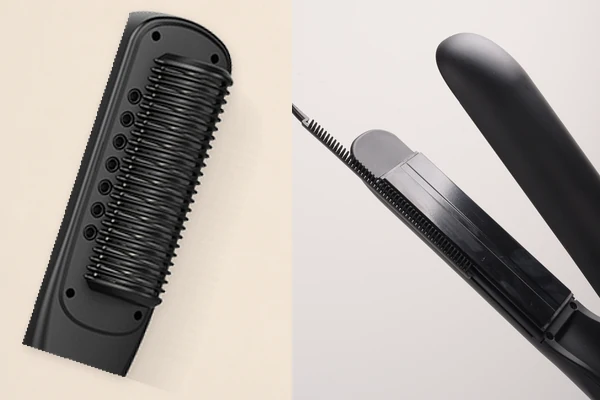
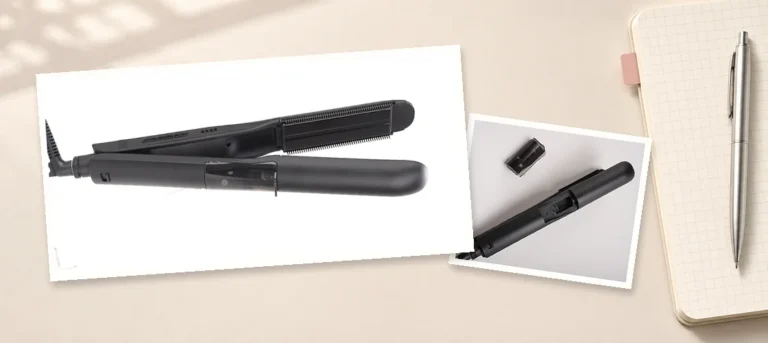
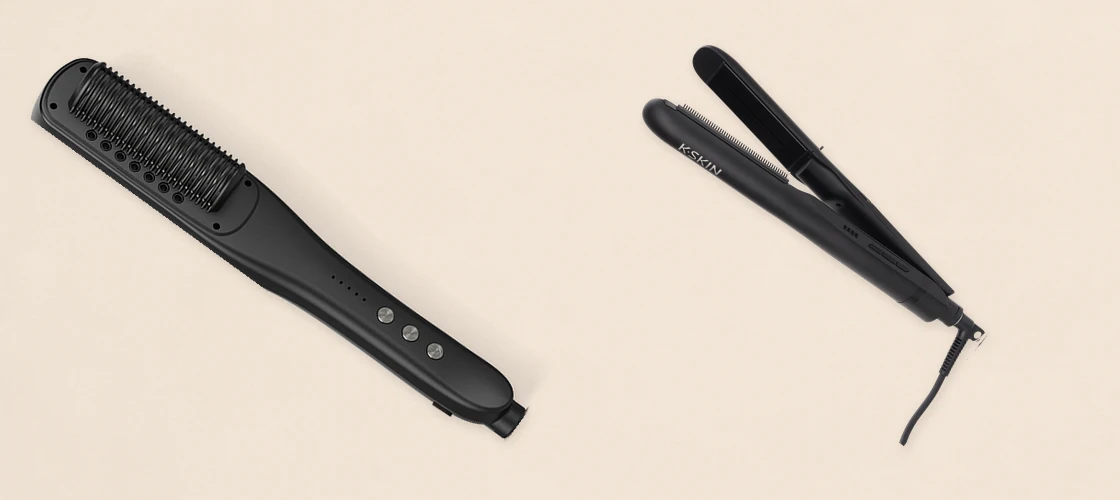
Look closely at the KD258 and you can see teeth beside its plate. That's an easy detail to miss when shortlisting from a catalog. Teeth alone don't make a tool a straightening brush. On the KD258, the user opens the iron, positions a section and closes the plates around it. On the KD880, the hair passes through an open brush face. It takes only a few seconds with the two samples to see a difference that a specification table struggles to convey.
That distinction matters even if both products will carry the same brand and sit at a similar price. Someone who wants to brush through dry hair has a reason to pick up the KD880. Someone who likes to isolate one section, hold it between plates and release it at a chosen point has a reason to pick up the KD258. The steam feature has a different role in each of those movements.
What the Brush Teeth and Flat Iron Plates Change
The working surface determines how much of the styling process is in the user's hands. With the brush, the angle of the wrist and the way a section enters the teeth determine which strands travel through the heated area. With the iron, the user chooses the section first, then closes the tool around it. Both give the user control, but over different parts of the pass.
KD880 keeps the brushing motion familiar
The KD880 steam hair straightening brush has an open comb face, a removable water tank and an independent steam switch. Its intended routine is styling dry natural hair. A customer who already uses a heated brush can recognize the basic action immediately. What the KD880 adds is the choice to bring steam into that action while keeping the same hand movement.
For a buyer, the interesting detail is how the teeth receive the hair. On a sample, watch a section from the side. Does it enter the working area across its width, or does part of it ride over the tips? If a few strands escape at the edge, try a narrower section before drawing conclusions about the heat setting. It is possible for two passes at the same setting to feel quite different simply because different amounts of hair engaged with the brush.
KD258 keeps a chosen section between the plates
The KD258 steam flat iron uses heated aluminium plates with comb teeth alongside the styling surface. Closing the arms holds the selected section as the tool moves along it. A buyer developing a steam version of an existing flat iron can retain the part that customers already understand: where to place the hair, how to close the iron and when to release it.
Here, the revealing part of a sample trial is the moment of closure. Does the section stay where the operator placed it? Does the grip feel even as the section tapers toward the ends? Those observations tell you more about the feel of this particular iron than a comparison of maximum temperatures. They also give a product team something specific to discuss with us if the sample feels different from the flat iron it is intended to complement.
How Water Filling and Steam Activation Differ
Both reference models have removable reservoirs and a separate steam control. A photograph of the water tank can establish where it sits. What a buyer also needs to understand is what happens between filling that tank and making a styling pass.
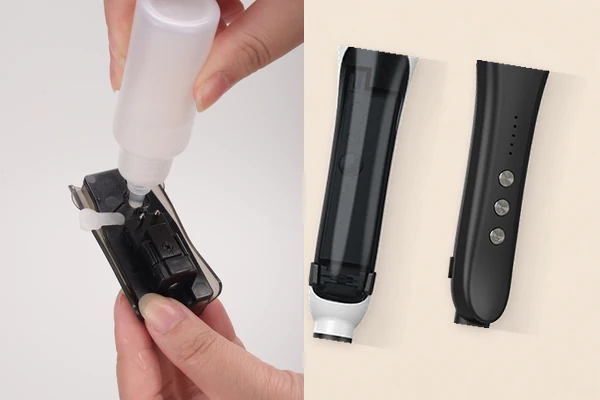
On the KD880, the heat selection and the steam switch have separate jobs. The matching instructions matter because switching the brush on, reaching the selected heat level and enabling steam are distinct steps. For a first sample review, follow them in sequence. Then repeat the handling with the tool cool and disconnected to see how readily someone can remove, refill and seat the tank using the instructions that will accompany the product.
The KD258 adds a condition that is especially useful to know before a demonstration. Once the iron is ready and steam is enabled, closing the plates starts steam output. Opening them stops it. An open iron with the steam function selected can therefore appear inactive while behaving as intended. That one detail belongs in the localized instructions and in any demonstration of this model. It also explains why timing the KD258 while it lies open tells a buyer very little about steam during styling.
Water figures need the same care. The KD258 reference information gives an 11 mL fill for a specified steam test. That figure tells you how much water was used in that test. A packaging claim about tank capacity needs a capacity specification, and a claim about styling time needs a defined operating pattern. A person who opens the plates between sections uses the steam function differently from a test conducted over one continuous interval.
Which Format Adds Something Useful to a Retail Range?
A good starting point is the item you would place beside the new model. If two product descriptions both end at “steam straightener,” even your own buying team may struggle to explain why it wants both. The distinction becomes clearer once you name the routine each item preserves.
| Current range or purchasing brief | Sample worth considering first | What the sample can help you decide |
|---|---|---|
| A heated brush already has a place in the range | KD880 steam brush | Whether independent steam control adds a useful option while retaining the brush-through action customers chose the original tool for |
| A conventional flat iron is an established seller | KD258 steam flat iron | Whether the plate grip, glide and closure-triggered steam make sense as the next model in that line |
| The range already includes brushes and irons, with budget for one addition | One reference sample of each | Which format fills the more specific gap once your team handles the reservoir and makes a styling pass |
| A private label brief calls for a “steam hair tool” but leaves the format open | Compare the working faces before choosing packaging | Whether the intended use is easier to recognize with an open brush face or a section held between plates |
For a brush-led project, our hair straightener brush range lets you compare the KD880 with other brush formats before committing to steam as the feature worth adding. For a flat iron line, the stronger comparison may be with the model already in your assortment. Bring that reference into the sample review. If customers value its grip and release, those details deserve as much attention as the additional steam function.
How to Compare the Two Samples Under Matched Conditions
A side-by-side trial can answer two different questions. One is which format suits the brief. The other is how a particular sample performs under conditions you could repeat. It helps to settle the first question in the hand and give the second a fairer trial than running both tools down the same lock of hair.
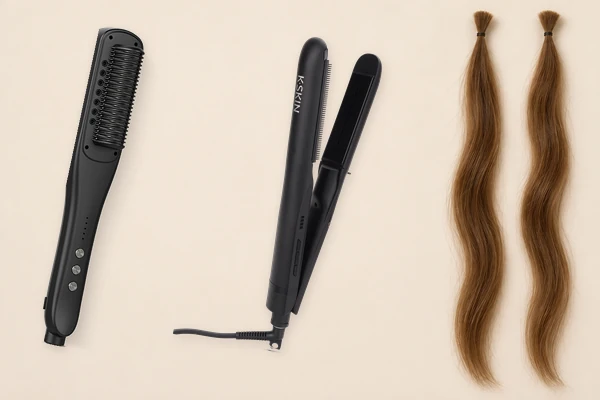
Give each tool a fresh starting section
Use comparable dry tresses from the same source, prepared to similar widths and thicknesses. If you brush a tress first and run the iron over it second, the iron receives hair the brush has already worked on. The apparent finish after the second pass can't tell you what the iron would have done from the original starting point. With another pair of tresses, you can repeat the comparison and switch which tool the operator picks up first.
Keep the operator, lighting and viewing angle consistent. Record the selected heat setting, whether steam was enabled and how many passes each section received. Check the actual settings offered by each sample. “Medium” on one control is a label, and the middle position on the other may correspond to a different temperature. Where the settings differ, retain both values in the notes so a later reader can interpret the comparison.
Let each tool work in its own way
Matched starting conditions still leave room for the brush and iron to be handled differently. Forcing an identical motion would defeat the purpose of comparing the formats. With the KD880, observe how readily the hair enters the teeth and whether some strands need to be picked up again. With the KD258, observe how the plates take up the section, how smoothly it travels and how readily it releases. For both, note whether steam operation matches the instructions for that sample.
Give the observations enough detail to be useful a week later. “Easy to use” is hard to act on. A note that identifies where a section slipped free, which control the operator reached for, or when output began gives the team a point it can revisit. Photographs of the finished tresses can support that record if the starting condition and lighting are documented. One pair of photographs provides little basis for a promise about every hair texture, styling speed or long-term hair condition.
What to Settle Before Requesting a Private Label Quote
Once the preferred format is clear, the quotation can describe the product the team actually wants. For the brush, that may mean keeping the selected KD880 configuration and asking about packaging for a particular market. For the iron, the priority might be matching the grip and control layout of the KD258 sample while reviewing plug and instruction requirements. Either conversation is easier with a named model and one or two observations from handling it.
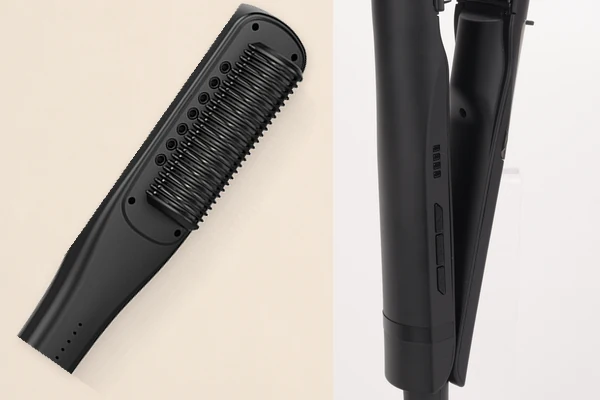
Before settling artwork or comparing quotations, a short sample record is usually enough to bring the discussion into focus:
- Identify the selected model, destination market, rated electrical version and plug on the sample.
- Keep a photograph of the working face, reservoir and controls that the packaging will show.
- Match filling, steam activation and cleaning directions to the instructions for that version.
- Separate what comes in the quoted retail pack from accessories still under discussion.
- Note any requested change to the teeth, plates, reservoir or control behavior so its feasibility can be reviewed before artwork approval.
Frequently Asked Questions
Can a steam straightening brush replace a flat iron in an existing product line?
It can fill the same broad straightening category, but replacement depends on what customers value in the existing item. If they chose it for the feel of clamping and releasing a section, swapping in a brush changes a central part of the experience. A brush makes more sense as a replacement when the brief specifically calls for brush-through styling.
Does steam mean either tool can be promoted for wet-to-dry styling?
Steam describes a function of the tool. It does not establish permitted starting hair moisture or drying capability. The KD880 is described for dry natural hair. For any wet-to-dry wording on a retail pack, the exact model would need instructions and supporting evidence that cover that use.
Is a larger visible steam plume a reason to choose one sample?
A plume can help show that output occurred under the observed conditions. Its appearance also depends on the lighting and background. For a purchase decision, the more useful observations are when output begins, how the controls respond during the intended movement and whether the operator can reproduce that behavior.
Can the same quick-start card be used for both models?
A common visual style can work across the range. The operating illustrations and sequence should follow each model. In particular, the KD258 card needs to show what plate closure does when steam is enabled. The KD880 card should show its brush controls and the filling sequence for its own reservoir.
Choosing the First Sample
If the gap in your range is a steam option for someone who likes to brush through dry hair, the KD880 is the logical first sample. If the appeal of your current straightener lies in selecting a section and controlling it between plates, start with the KD258. The reason to carry both becomes convincing when each earns its place through a different styling routine.
Tell K·SKIN which tool the new model will sit beside, where it will be sold and what you want the customer to recognize the first time they pick it up. Those details give us a useful starting point for reviewing a sample, the market configuration and your packaging brief. Explore steam hair straightener sourcing with K·SKIN.
🌐 Website: K·SKIN Global
✉ Email: info@kskinglobal.com