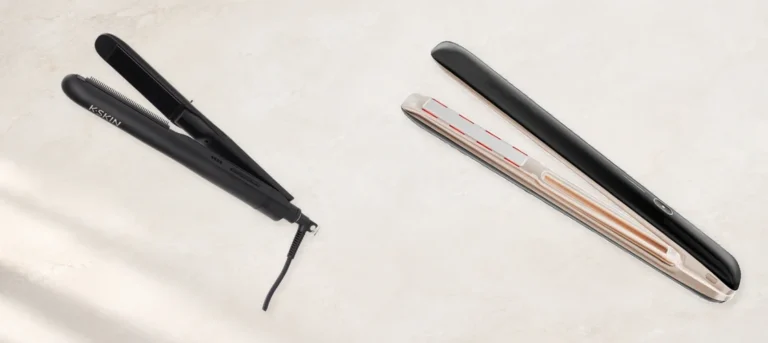
Your retail accounts have asked for a conventional flat iron. A steam model also looks promising, but both draw on the same opening budget. How much room does the second model really deserve?
Build your first wholesale flat iron assortment around the units you can already place. Give a second model its own allocation when it fills a gap in function or price that matters to your channel. Size any unconfirmed demand as a trial you can afford, then check whether the minimum order and carton quantities still leave enough stock for your core accounts.

The same steam flat iron can play two quite different roles. For a distributor whose customers already buy conventional irons, it might earn a place in a few stores while the regular model carries the opening order. For an importer filling a retailer’s specific request for a steam iron, the steam model may deserve the largest allocation. A product earns its place from the business waiting for it. Its position in a supplier’s catalog tells you very little about that.
Which Flat Iron Should Anchor the First Order?
Start with what a customer has actually agreed to take. A retailer asking for a sample, a store approving a product for listing, and an account confirming an opening quantity are three different stages. All three are encouraging. Only the last gives you units you can confidently allocate.
Read the channel before choosing the core SKU
For a distributor, the strongest starting point may be a request that names the product format, the acceptable wholesale price and the opening quantity. A direct-to-consumer brand launching its first flat iron has different evidence. It may know what its customers spend on adjacent hair tools but have no flat iron orders in hand. In that case, a core SKU is still a sensible choice. Its quantity should come from the launch budget and the amount of stock the brand can carry while learning what sells.
A quick way to compare two candidates is to finish the sentence, “We need this version because ___.” A regular flat iron might keep an existing account within its agreed buying price. A steam model might answer a request that the account’s current assortment cannot fill. If the only distinguishing detail is a second finish, its strongest case would be a customer who wants that finish in a meaningful quantity. Otherwise, one finish gives the opening stock more room to move between accounts.
Test the price band from the buyer’s side
Take the expected shelf price back through the actual sales channel. What price will the retailer pay you after allowing for its margin and planned promotions? What landed cost can your business carry at that selling price? An online brand should use its own channel costs, including applicable marketplace fees and fulfillment. The same shelf price can leave two buyers with quite different purchasing budgets.
This matters particularly when the steam version costs more to bring in. If an account will buy it only at the conventional iron’s price, you need to know that before reserving stock. If the account accepts a separate price band after seeing the sample, you have a commercial reason to keep both lines. A general comment that the steam model “looks premium” leaves that question open.
When Does a Steam Flat Iron Earn a Second SKU?
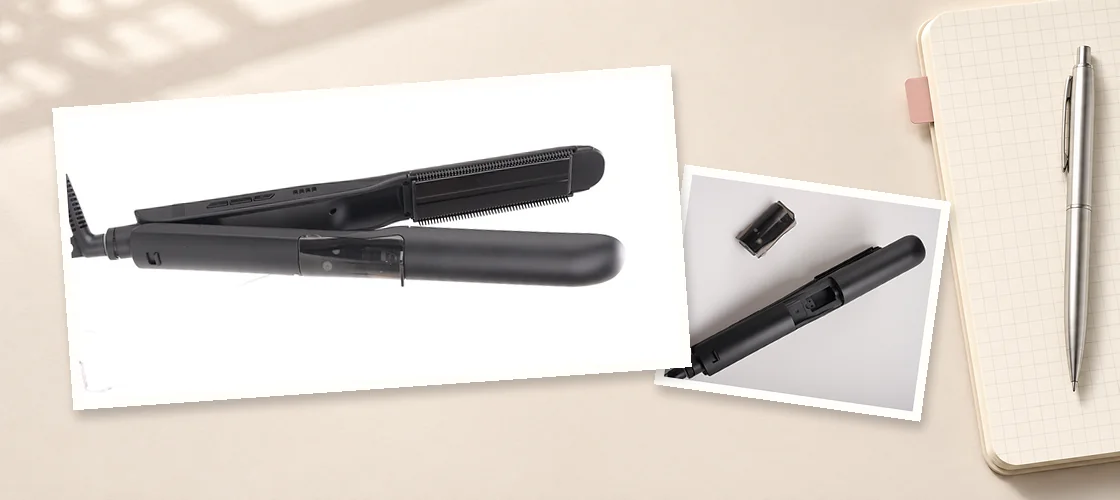
Steam gives the buyer something specific to evaluate beyond color and finish. On the K·SKIN Global KD258 steam flat iron, the reservoir is removable and steam has its own switch. With steam enabled, closing the plates starts the output and opening them stops it.
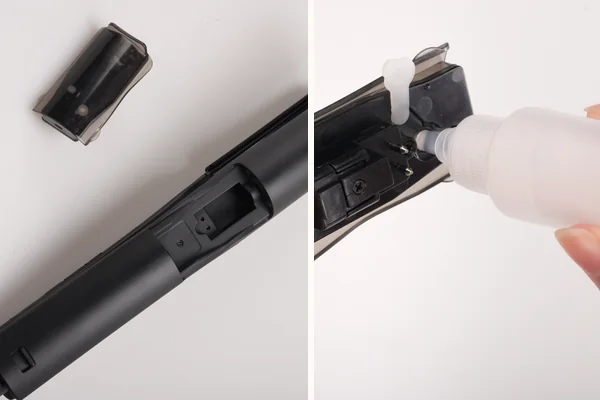
That distinction makes a sample meeting more useful. An account buyer can handle the reservoir, see the controls and consider the proposed retail price with the actual product in hand. The most useful question at that point is, “Where would this sit in your range, and what opening quantity would you consider at this price?” A buyer who identifies a store group or an online listing gives you something to plan around. A buyer who wants to show the sample to colleagues has given you a good reason to lend a sample.
There is also a business case for leading with steam. A retailer may already have adequate coverage at its opening price and want one distinctive addition for a particular shelf position. Offering a third conventional iron in that situation would divide attention without answering the brief. The KD258 gives the account a visible feature to assess, while the first order can stay focused on one market version. For buyers exploring that direction, K·SKIN Global’s steam hair straightener sourcing page connects the product choice with sample and supply discussions.
How Many Flat Irons Belong in the Opening Order?
There are two useful ways to arrive at a first-order quantity. One starts with customer allocations. The other starts with the money available for a trial. A distributor can use both on the same order: allocate the core iron against named accounts, then budget separately for a small steam launch.
For retail accounts, add up the quantities with a destination
Suppose six stores have each confirmed eight sellable units of a particular version and each needs a separate display unit. That gives you 48 sellable units and six display units, or 54 pieces before any reserve. Those figures are an illustration of the arithmetic. Your account commitments supply the numbers that matter. If the displays come from samples already held, the commercial order need only cover the 48 sellable units.
Now consider the reserve. A central pool that can replenish any of the six stores has a different purpose from stock already promised to a seventh account. Keep those quantities on separate lines. If cash gets tight, you can revisit the reserve without accidentally cutting a customer’s allocation.
For an online trial, work back from the budget
Set aside what the trial needs before inventory arrives, such as sample expense or launch photography. Divide the remaining inventory budget by the estimated landed cost per sellable unit. Round down. The result is a spending ceiling; your opening quantity can be lower. If fixed freight charges are significant, recalculate the landed cost at the quantity actually quoted. A small shipment may give a different answer from the original estimate.
Then compare that ceiling with the supplier’s minimum and packing terms for the selected version. A trial that only fits the budget at a volume discount you cannot reach is already over budget. A useful alternative is to get the sample into the hands of the account most likely to buy, then return to the quotation with firmer demand.
A first-order quantity worksheet
Use one column per orderable version. Duplicate a column when a second plug, finish or retail pack has its own minimum or can only be sold to a particular account.
| Planning input | Core flat iron | Proposed steam flat iron |
|---|---|---|
| Account, channel and target price band | ___ | ___ |
| Market, plug and retail pack to quote | ___ | ___ |
| A. Confirmed sellable units, after available stock | ___ units | ___ units |
| B. Additional display or demo units needed | ___ units | ___ units |
| C. Trial or reserve units within budget | ___ units | ___ units |
| Requested quantity (A + B + C) | ___ units | ___ units |
| Supplier minimum and required carton multiple | / | / |
| Quoted orderable quantity and estimated landed unit cost | × | × |
| Cash required at the quoted quantity | ___ | ___ |
The last two rows can change the decision. In the six-store example, if the supplier quotes full cartons of 12 and confirms the minimum is already met, 54 pieces becomes 60. The extra six might make a useful replenishment reserve. They also consume cash. Across several versions, that rounding can use up the money intended for the steam trial. Compare the combined cash requirement with the opening budget one more time before approving the mix.
Which Versions Can Share the Same Stock?
A second SKU can appear even when you buy only one model. Two accounts may want the same iron but require different plugs, manual languages or retail packaging. The risk shows up at replenishment: spare units assigned to one account may be unsuitable for the other.
For a first order, one useful supplier question is, “Which parts of these two configurations can be quoted together, and which have a separate minimum?” Put the answer beside each line on the worksheet. If the same agreed product and retail pack can serve both accounts, you may have a single pool of stock. If one customer requires its own printed box, treat that quantity as committed to that customer unless another use has been agreed.
This is also where a lower unit price deserves a second look. Compare the total cash outlay at each quoted quantity and ask where the extra pieces could go. An additional carton of a version that several accounts can reorder has some flexibility. The same carton in an account-specific pack gives you fewer options. That difference can be worth more to a first order than a small discount.
What to Send for a Bulk Flat Iron Quote
A useful inquiry can be short. Include enough information for the supplier to quote the mix you intend to buy and to flag the line that might make it impractical.
- Name the destination market, sales channel and target buying price or retail price band. Specify which price you are giving.
- List the opening quantity by model and version. Identify any units already promised to customers.
- Describe the plug, pack and instructions needed. Flag a customer-specific requirement that would limit where the goods could be sold.
- Identify the sample decision still open, such as whether an account will take the KD258 at the proposed price.
- Ask for the minimum, carton multiple, availability and delivery terms for each line, plus the estimated timing for a repeat order.
It is reasonable to request two comparable quotes: the core allocation on its own, and the same allocation with the steam trial added. Keeping the core quantity fixed makes the extra cash needed for the trial visible. K·SKIN Global’s Bulk Supply service is the appropriate starting point for that discussion. Availability and timing depend on the model, quantity and agreed configuration.
Frequently Asked Questions
Can a wholesale flat iron assortment start with just one model?
Yes. One model can cover several accounts when the price band, format and market version fit all of them. A single-model order can also leave room to replenish the account that moves first. A second SKU becomes useful when you can name the demand the first model leaves unserved.
How should we count an account that wants exclusivity on a color?
Ask what quantity the account is prepared to commit to that finish, and request the supplier’s terms for it separately. If other customers cannot take those units, exclude them from the shared reserve. Any exclusivity arrangement needs its own agreed scope and terms.
What if the steam sample is approved but the opening quantity is undecided?
Keep sample approval and purchase approval separate on the order sheet. The first settles which configuration the account likes. The second establishes how much stock has a destination. You can request pricing for a stated quantity range while the account finalizes its allocation.
What should trigger a reorder after the launch?
Track sellable units by version and account, then compare the remaining stock with actual movement and the current replenishment lead time. Display units, transfers between stores and customer sales are different events. Keeping them separate helps you see whether the next order should add depth to the core iron or expand the steam line.
Conclusion
A workable first order gives each flat iron a reason to be there and enough units to do its job. Protect the allocations your customers are counting on. Where a steam model fills a gap, give it either a committed quantity or a trial budget you can carry through to a clear decision.
If you are weighing a KD258 steam allocation alongside your existing range, send K·SKIN Global your destination, proposed quantities and target price band. That gives us a starting point to discuss the sample, the orderable version and what the combination would require from your first-order budget.
🌐 Website: K·SKIN Global
✉️ Email: info@kskinglobal.com