A buyer deciding between a hot-air brush and a flat iron needs to know where each tool fits in the styling routine. Start with the hair condition permitted for the actual model and the finish the customer wants.
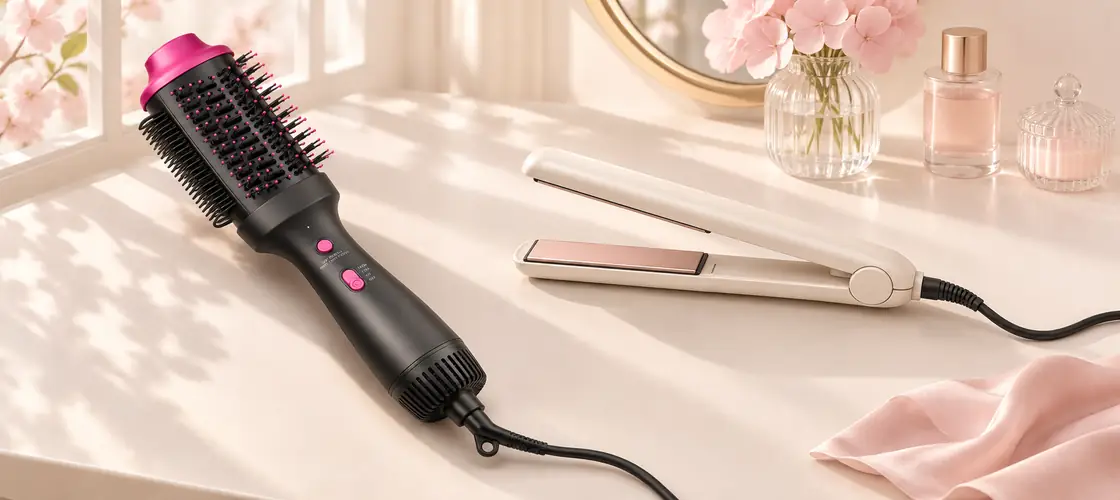
A hot-air brush uses airflow while brushing; a flat iron uses heated plates for targeted finishing. An airflow tool may shape a section before a finishing step when its instructions permit that routine. A steam-enabled flat iron still works through plate contact. Neither the word “air” nor the word “steam” establishes that a tool can dry wet hair.
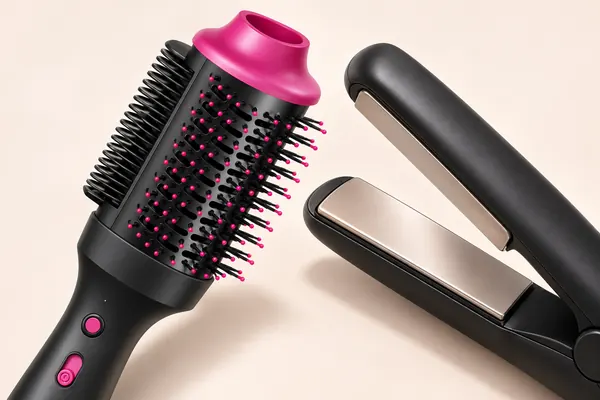
Where Does Each Tool Fit in the Styling Routine?
The difference starts before styling. An airflow tool may take part in the drying stage, depending on its instructions. A conventional flat iron comes after drying, when the user wants to work on the shape and finish of selected sections.
That distinction matters more than whether both boxes carry the word “smoothing.” Customers may be looking for similar results while expecting quite different ways of getting there.
| Point of comparison | Hot air brush | Conventional flat iron |
|---|---|---|
| Main working method | Air delivered through a brush head; some models also have separately heated contact surfaces | Hair held between two heated plates |
| Place in the routine | Air-assisted drying or shaping within the model's instructions | Straightening or finishing after drying |
| How the user controls hair | Bristles, head shape, tension and brushing direction | Plate contact, section size, grip and movement |
| Possible product position | A combined brushing and airflow routine | A dedicated tool for controlled straightening and finishing |
| Preparation | Hair condition must suit the selected function | Dry hair for conventional plate styling |
| Useful sample question | Does the head and airflow arrangement suit the intended styling task? | Do the plates and handle provide the required section control? |
A hot air brush also differs from a heated straightening brush without airflow. Our comparison of hair straightener brushes and hot-air brushes explains that distinction. If your customer already dries their hair separately and wants a dry-styling tool, the straightening brush vs flat iron guide addresses that choice more directly.
What Does a Hot Air Brush Bring to the Routine?
Bringing air delivery and brushing into one handheld appliance gives a brand something concrete to demonstrate: how the customer guides the tool through the styling task. The value depends on whether the selected head, grip and controls make that task practical.
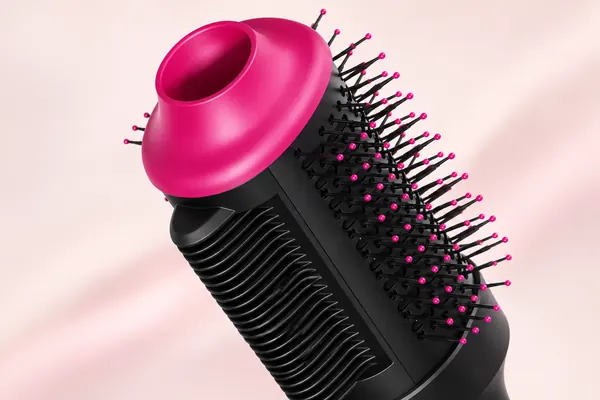
One Tool Changes the Handling
With a separate dryer and brush, the user coordinates two objects. A hot air brush brings those functions together, although it does not automatically make every movement easier. Weight, balance and reach still matter, particularly when working around the back of the head.
During sample evaluation, try the movements your demonstration will show. Notice whether the user can reach the controls without changing grip awkwardly, whether the cord gets in the way, and how easily the head follows a section. These details help a buyer judge the product's suitability beyond its feature list.
Head Shape Helps Define the Promise
A round or oval head can support a different brushing motion from a broad, paddle-style head. Bristle arrangement and outlet placement also affect how the user guides the tool. The category name alone does not establish that every model can create the same shape or volume.
For a brand building a blowout-focused offer, the sample needs to support the intended lifting and shaping routine. A smoothing-focused product may call for different handling. Decide which job leads the product story before adding secondary functions to the packaging.
This makes the demonstration more useful, too. Customers can see the motion, the preparation and the resulting shape, rather than having to interpret a list of overlapping styling claims.
Where Does a Flat Iron Have an Advantage?
A flat iron gives the user direct control over a defined section of dry hair. That is a meaningful strength for customers who already have a drying routine and want a separate tool for precise straight styling.
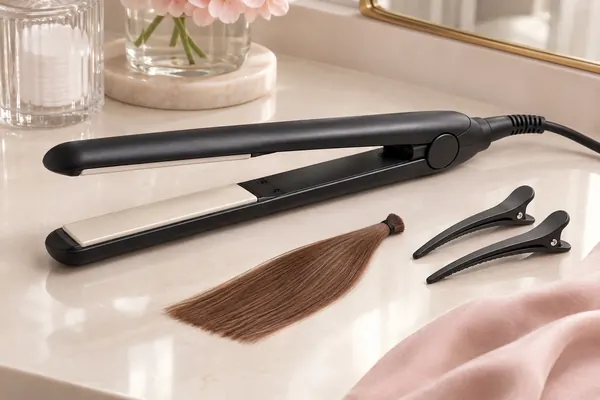
Controlled Work on Selected Sections
Paired plates let the user work deliberately through the front, ends or other areas that need finishing. A customer may prefer this approach because it separates drying from styling and gives each step a clear purpose.
For product buyers, plate alignment, edge finish and handle resistance deserve attention. So does the way a section moves through the closed plates. Those observations help distinguish samples that look similar in a catalog.
Some flat irons also support bends or curls, but that depends on the body design and instructions. It should be demonstrated on the selected model rather than assumed from the two-plate format.
A Clear Role Alongside Airflow Tools
A flat iron can sit comfortably in a range that also includes a hot air brush. One customer wants airflow-assisted shaping; another wants targeted finishing after drying. Some may use both on different occasions.
There is no need to present the flat iron as an outdated step or the hot air brush as a universal replacement. Equally, using two tools should not become a required routine when one already delivers the desired result. The product story should help customers choose without encouraging unnecessary repeated heat exposure.
Can a Hot Air Brush Replace a Flat Iron?
For some routines, yes. If the permitted hot-air process creates the finish a customer wants, they may have no reason to use a separate finishing tool. Where the priority is targeted plate styling, a flat iron can still have a distinct purpose.
Hair type alone is not a reliable shortcut for choosing between them. Hair condition, section size, the desired shape and the user's handling all affect the result. A useful demonstration makes those conditions visible instead of implying that one tool suits everyone.
Claims about speed need the same care. Compare the complete routine, including any preparation, separate drying and additional finishing. Timing only the final pass can give a misleading impression of the work involved.
For heat-related claims, the American Academy of Dermatology's heat-styling guidance recommends using flat irons on dry hair at low or medium heat and warns that excessive heat can damage hair. It does not establish that every hot air brush is gentler than every flat iron. Describe the intended use clearly; reserve comparative damage claims for evidence that actually supports them.
How Does the Styling Routine Shape Product Positioning?
Once the basic difference is clear, the commercial question becomes more specific: which part of the customer's routine should this product earn a place in? That answer gives the product manager, packaging team and retailer a shared direction.
| Customer task | Product direction to consider | What the retail presentation should show | What the brand needs to define |
|---|---|---|---|
| Combine brushing with air-assisted shaping | A hot air brush with a suitable head and permitted routine | Starting hair condition, brushing motion and realistic finish | The main styling task and any preparation required |
| Refine hair that is already dry | A conventional flat iron | Sectioning, plate handling and targeted finishing | The intended finish and relevant plate format |
| Access airflow and heated-brush functions in one appliance | A model with clearly distinguished controls | What each control does and the permitted operating sequence | Which functions lead the offer and how they are explained |
| Offer customers more than one styling approach | Complementary products with distinct roles | Why someone would choose each tool | Where the products differ enough to justify separate positions |
Make the Routine Understandable in the Sales Channel
On an ecommerce page, a short demonstration may do much of the explaining. Include the starting condition and any necessary preparation. Showing only the finished hair leaves customers to guess what happened before the camera started.
In physical retail, staff need a distinction they can explain in a sentence or two. “Brushing with airflow” and “plate finishing after drying” give them a practical starting point. More detailed advice can then follow the selected model's instructions.
The same discipline helps with packaging. If the front of the box emphasizes a combined routine, the instructions should explain that routine clearly. A long list of functions does little for the customer if the main use remains unclear.
Give a Combined Product a Leading Role
A product with more than one system still needs a clear reason to buy it. The brand might lead with air-assisted brushing and explain the separate heating function afterward, provided the permitted operation supports that positioning.
This is where a specific model becomes useful. It turns a broad category discussion into decisions about controls, handling and customer guidance.
What KD311 Shows About Airflow and Heated-Brush Design
K·SKIN Global's KD311 hot-air straightening brush brings independently controlled airflow and heated-brush functions into one corded home-use appliance. For a brand considering a combined product, it offers a concrete starting point for evaluating how those functions should be presented.
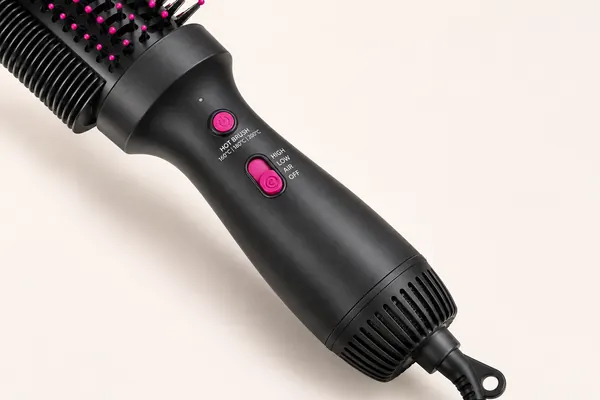
Separate Controls Need Separate Explanations
KD311's instructions identify an airflow selector and a separate heated-brush control with three heat settings. The two controls should not be collapsed into a single list of “heat levels.” In particular, a heated-brush temperature setting is not a measurement of outlet-air temperature.
That distinction has a practical consequence for retail content. A photograph showing both controls can be more informative than a feature badge that simply says “multiple settings.” The accompanying explanation should tell customers which function each control operates.
| Confirmed design feature | What it means for the customer | What to address during product selection |
|---|---|---|
| Separate airflow selector | Air operation has its own control | Whether the positions and labels are understandable on the supplied version |
| Separate heated-brush control | Contact heating is selected independently | How the heating settings and permitted use are explained |
| Both systems in one body | The customer handles one appliance with different functions | Grip, control access and the clarity of the operating sequence |
| Version-specific electrical specifications | The supplied product must suit its intended destination | Matching the sample, electrical version, label and instructions |
Evaluate the Interface, Not Just the Feature Count
A useful sample review asks someone to identify and operate each control using the supplied instructions. Observe where they hesitate, whether they confuse the two systems, and whether normal handling makes the controls easy to reach. Use those observations to identify what needs a clearer explanation or closer product review.
The available KD311 guide includes towel-drying preparation language alongside dry-hair warnings. That wording does not establish permission to use every function on damp or wet hair. Before filming such a demonstration or making a wet-to-dry promise, obtain clear, approved instructions for the exact supplied version and operating mode.
For a brand evaluating KD311, the immediate opportunity is therefore specific: assess a combined airflow and heated-brush design, then build the customer explanation around its confirmed operation. No category-wide performance promise is needed to make that product discussion useful.
From a Styling Routine to a Product Shortlist
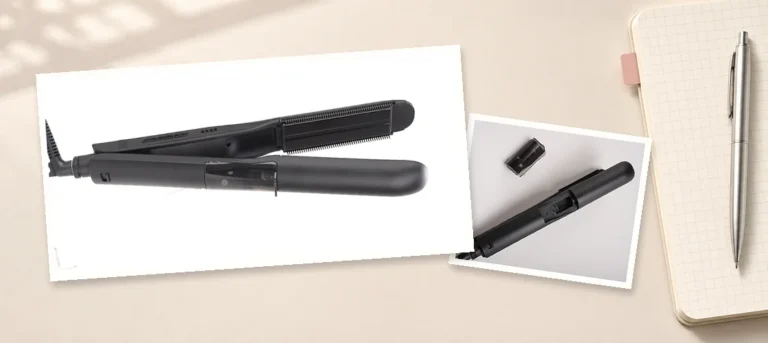
For airflow-assisted brushing, compare the KD311 hot-air brush and its separate controls with the intended starting hair condition. For plate finishing, evaluate the KD258 steam flat iron as a steam-enabled variant. Check reservoir handling and the steam setting separately from plate contact.
Choose the base format before discussing packaging through a private label project. A change to the heating or airflow system needs its own development review.
Frequently Asked Questions
Is a Hot Air Brush the Same as a Heated Straightening Brush?
No. A hot air brush includes airflow; a heated straightening brush may work through heated contact surfaces without blowing air. Combined products can include both systems, so the actual controls and instructions matter more than the name alone.
Can Every Hot Air Brush Be Used on Wet Hair?
No. Permitted starting conditions vary, and different functions within one appliance may have different restrictions. Follow the instructions for the exact model and mode. The presence of airflow does not make every heated surface suitable for wet hair.
Does a Higher Wattage Mean Better Straightening?
Not by itself. Wattage is an electrical rating, not a measurement of the hairstyle. Airflow and plate tools use different systems. Compare the intended task and sample result rather than using power alone to rank them.
Should a Retailer Offer Both Products?
Both can make sense when they serve distinct needs. A smaller product range may focus on one routine; a broader range can offer airflow-assisted shaping alongside dry-hair plate finishing. The distinction should be clear enough for customers to understand without a lengthy explanation.
What Should a Brand Send When Asking About KD311?
Send the destination market, sales channel, intended styling routine and sample requirements. Include proposed branding or packaging changes and any functional changes you are considering. That helps establish whether the project can start from an existing version or needs development review.
Conclusion
Build the demonstration around the step each tool performs. For an airflow-led range, check the model’s instructions and controls. For a plate-led range, compare the finish and handling first, then review steam straightener sourcing options if the reservoir and steam function fit the brief.
🌐 Website: kskinglobal.com
✉️ Email: info@kskinglobal.com