For a retail range, the choice between a straightening brush and a flat iron starts with the demonstration. Will the customer brush through a section or place it between two plates?
A straightening brush guides hair through heated teeth. A flat iron holds a section between plates for more direct placement. Choose according to the styling task, working area and controls, then check the result on samples under comparable conditions. Neither design alone establishes faster styling or less damage.
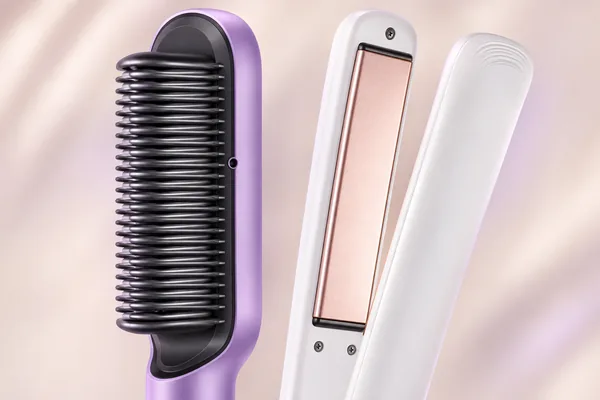
Straightening Brush vs Flat Iron: What Is the Main Difference?
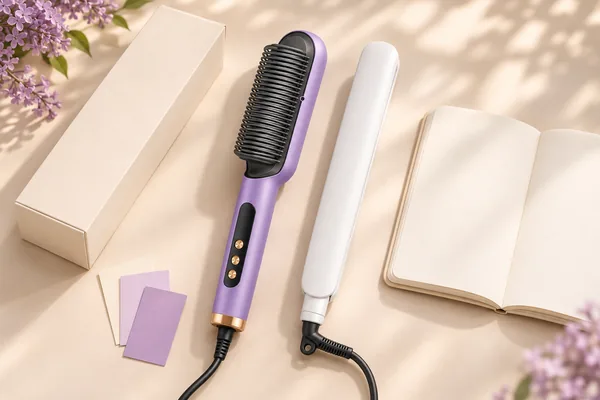
A heated brush guides hair through its teeth and across heated contact areas. A flat iron closes around a section, holding it between plates as the user moves along the length. These actions give each format a different handling experience.
Here, a straightening brush means a heated tool without drying airflow. A flat iron means the familiar two-plate hair straightener, not a curling wand. This comparison concerns conventional dry-hair styling; hot-air and steam-assisted products introduce additional functions.
| Comparison point | Heated straightening brush | Flat iron |
|---|---|---|
| Hair contact | Hair passes through teeth and heated contact areas | Hair is held between two heated plates |
| Main action | Guide and brush through a prepared section | Close, guide and release the plates |
| Advantage to explore | Hair guidance combined with smoothing or shaping | Direct placement and pressing of a selected section |
| Important design details | Tooth spacing, head size, grip and controls | Plate dimensions, alignment, closure and grip |
| Retail demonstration | Show how hair enters the head and how the ends are shaped | Show section placement, plate closure and movement |
The distinction gives customers a reason to compare the tools beyond appearance or temperature settings. It also gives buyers a starting point for deciding which samples belong in their shortlist.
What Are the Advantages of a Hair Straightening Brush?
A straightening brush brings heat and hair guidance into a familiar movement. For customers who prefer working through their hair with a brush-shaped tool, that operating style can be a meaningful part of its appeal.
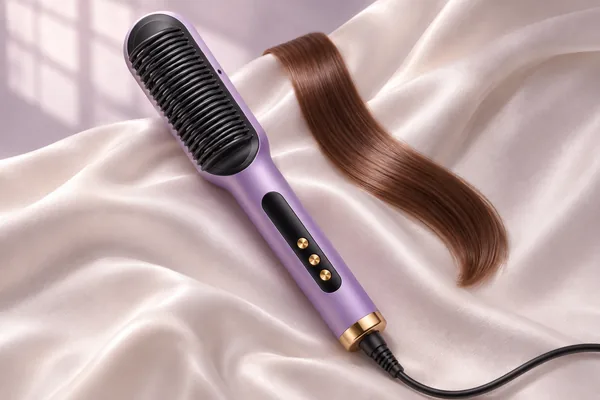
A Brushing Motion for Smoothing and Shaping
The user guides a prepared section through the head without opening and closing plates around it. This makes smoothing the lengths and shaping the ends useful tasks to demonstrate, where supported by the selected model.
The demonstration should include sectioning and preparation. A heated brush is not a detangling shortcut, and forcing it through knots is not the intended styling action.
For a brand, the opportunity is a product with an understandable routine. Show the movement, the areas being styled and the finish achieved under the demonstrated conditions. Customers gain more from that than from a broad promise of effortless styling.
Head Design Gives Each Brush Its Character
Tooth spacing, head width and handle shape affect how hair enters the styling area and how the tool feels in use. A compact head and a broader head may serve different handling preferences even when both products are described as straightening brushes.
This is where product selection becomes more specific. A brand focused on small sections or fringe styling should examine access and grip. A range aimed at longer sections may have different priorities. The appropriate design follows the task; a larger head or more teeth is not automatically an improvement.
What Are the Advantages of a Flat Iron?
A flat iron gives the user direct control over a section held between paired surfaces. That makes it a distinct product choice for customers who prefer deliberate placement and a pressing action.
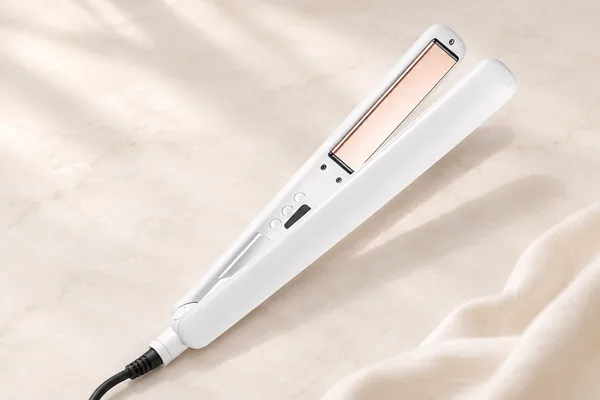
Defined Placement for Precise Straight Styling
The user chooses a section, places it between the plates and guides the closed tool along it. This is easy to communicate visually: customers can see which area is being worked on and how the tool is positioned.
For someone seeking a closely controlled straight finish, that action offers a clear approach. It can also suit targeted work on selected sections rather than repeating the same routine across the entire head.
Plate and Handle Design Matter Together
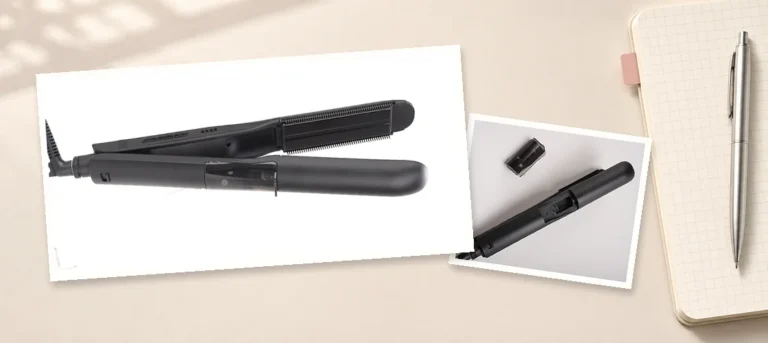
Plate alignment, edge finish, hinge movement and closure affect the experience. A buyer needs to feel how the sample holds and releases a section, not simply compare plate dimensions in a catalogue.
K·SKIN Global's product materials include the KD280 flat-iron format shown here. Its paired plates and hinged body illustrate this side of the comparison. It remains a model reference rather than a promise of current stock or a particular order configuration.
A brush should not be presented as the modern replacement for an outdated flat iron. The two formats offer different ways to control hair, and a credible range can explain the strengths of both.
How Do Styling Goals Change the Choice?
Start with the finish your range promises. On comparable sections, assess the brush’s grip and guidance alongside the flat iron’s plate contact and handling. Record the starting condition, settings and number of passes. A hair-type label alone is too broad to specify a temperature or support a performance claim.
Is a Straightening Brush Faster or Less Damaging Than a Flat Iron?
Neither shape establishes a universal advantage. A meaningful speed comparison includes preparation, warm-up, sectioning and repeated passes—not just a few seconds of movement in a video.
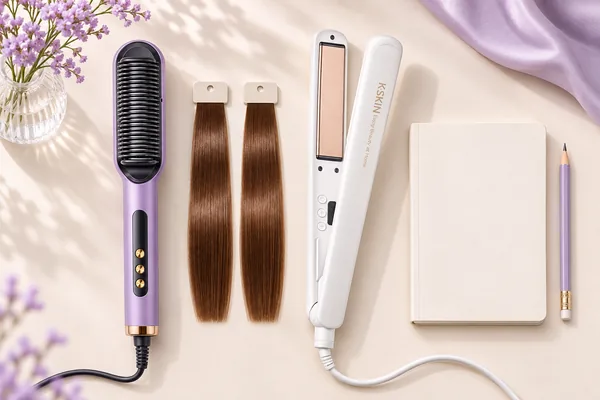
Compare the same task. Tidying already-straight lengths is different from creating a pressed finish from another starting texture. Record the complete routine and judge the result separately from the time taken.
For heat damage, the American Academy of Dermatology's heat-styling advice notes that excessive heat can damage hair and advises using flat irons on dry hair at low or medium settings. It does not establish a performance ranking between a particular brush and flat iron.
A visible temperature setting is also not a measurement of the hair's temperature. Matching the displayed number alone does not make two tools' heat exposure identical. A styling demonstration can show handling and appearance; claims about structural damage need different evidence.
How Can Brushes and Flat Irons Fit into Your Product Range?
Once the operating differences are clear, the commercial question becomes more useful: what role will each product play for your customer? Two tools can share a shelf without making identical promises.
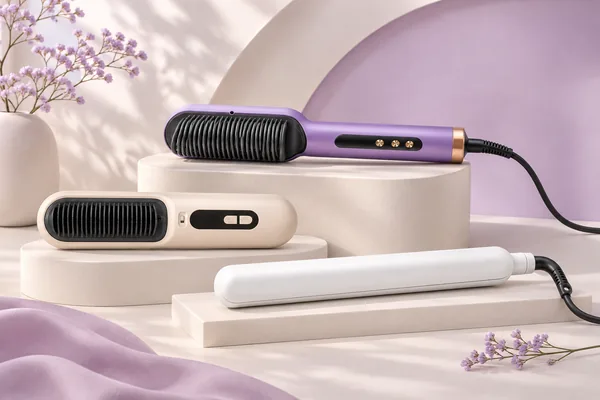
| Customer need | Product direction to evaluate | What the sales presentation should show | Configuration to discuss |
|---|---|---|---|
| A brushing-style routine for smoothing and everyday shaping | Corded heated brush | Hair entry, grip and permitted shaping movements | Head design, controls and destination-market electrical version |
| Styling without a connected power cord | Cordless heated brush | Charging, status information and the actual operating routine | Charging requirements, included items and model-specific usable time |
| Deliberate section-by-section pressing | Two-plate flat iron | Plate contact, closure and section placement | Plate and handle design, controls and electrical version |
| Different styling preferences within one customer base | Complementary brush and flat-iron products | A distinct use case for each SKU | Clear product naming, separate instructions and coordinated packaging |
These are positioning options to assess, rather than claims about which product will sell best in a particular channel.
For E-Commerce Brands: Make the Difference Visible
If both product pages promise only “smooth, straight hair,” the customer has little basis for choosing. A stronger presentation shows how each tool is used and why that motion might appeal to the buyer.
A brush page can focus on guiding hair through the head and the supported end-shaping movement. A flat-iron page can show section placement and controlled pressing. Preparation should remain visible in both.
Product naming, images and included items need to tell the same story. If a video uses accessories that are not in the box, make that distinction clear before purchase.
For Retailers and Distributors: Give Each SKU a Clear Role
Staff should be able to explain the difference without reciting a specification sheet. “A brushing-style tool for your preferred smoothing routine” and “a plate tool for controlled section styling” give them a useful starting point.
A smaller assortment may begin with one well-defined need. A broader range can offer both formats and then distinguish individual models by power arrangement, head or plate design, and controls.
That also helps with price positioning. A rechargeable format or display gives you a concrete feature to explain, but it does not establish an automatic premium or better performance. The proposed price still needs to make sense for the customer, configuration and market.
What Do K·SKIN Global's Product Designs Add to the Comparison?
Category explanations help buyers understand the options. Actual products show what those choices look like in a sample, a demonstration and a proposed order. Our corded and rechargeable brush formats provide two useful examples.
KD380K: A Corded Brush with a Defined Styling Direction
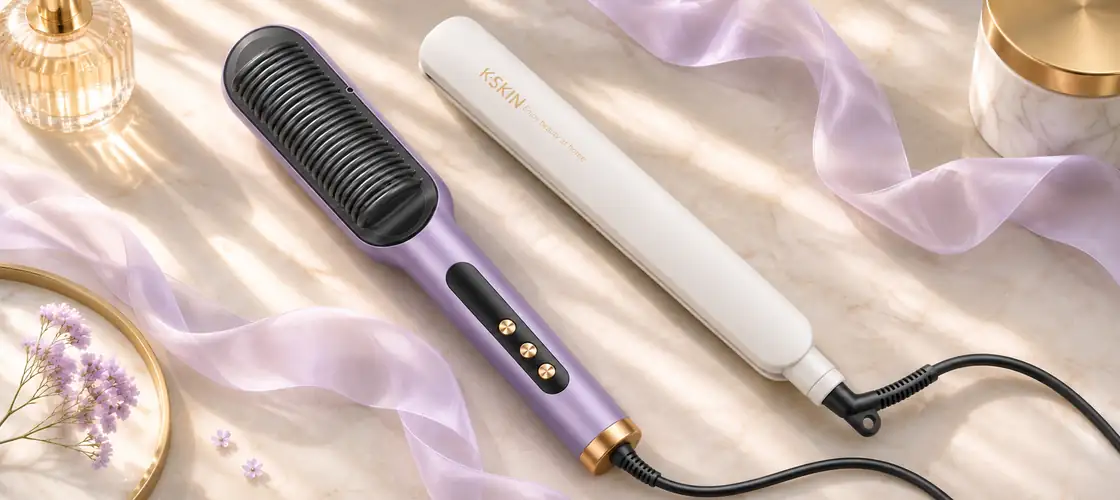
The KD380K corded straightening brush combines a corded format, PTC heating and selectable temperature settings. Its product direction includes straightening and inward shaping.
For a brand, this gives the product presentation a specific focus: show the brushing movement, the controls and the supported shaping task. The customer can understand what the product does without relying on an exaggerated before-and-after claim.
During sample review, look at the relationship between the comb structure and grip. Does the head suit the intended sections? Can the user identify the controls without interrupting the routine? These are practical ways to connect product design with the experience you intend to sell.
KD3820: Cordless Styling Changes More Than the Power Connection
The KD3820 cordless brush with a digital temperature display adds a rechargeable format. Its reference specification describes temperature, battery-level and charging-state indications.
That changes what the customer needs to understand. A demonstration should explain how the displayed information relates to preparation and use, while the pack needs clear charging guidance and an accurate list of supplied items.
For the buyer, the sample discussion should therefore include the charging arrangement and status indications as well as brush handling. Cordless operation is a distinct product characteristic, not proof of unlimited runtime or a better result on every hair type.
Considering a Steam Flat Iron?
The KD258 steam flat iron is a plate-based example with separate steam control. Its reservoir adds filling and maintenance steps beyond those of a conventional dry flat iron. Compare plate handling with the brushing motion first, then decide whether the steam option merits a separate place in your range.
Choose a Sample for Your Range
For a brushing-format product, compare the working area and corded or cordless setup through our straightening brush sourcing options. For a steam-enabled plate format, review our steam straightener sourcing options. Share the intended retail routine, destination market and quantity when requesting a sample.
Frequently Asked Questions
Can a Straightening Brush Replace a Flat Iron?
It may cover the needs of someone who mainly wants a brushing-style smoothing routine. Someone who prefers the grip and placement of paired plates may still choose a flat iron. For product positioning, describe the task each tool serves rather than promising complete replacement.
Can Either Tool Be Used on Wet Hair?
The conventional heated-brush and flat-iron comparison here concerns dry-hair styling. A product intended for another starting condition needs explicit model-specific instructions. Similar appearance does not establish the same permitted use.
Does a Flat Iron Also Create Curls?
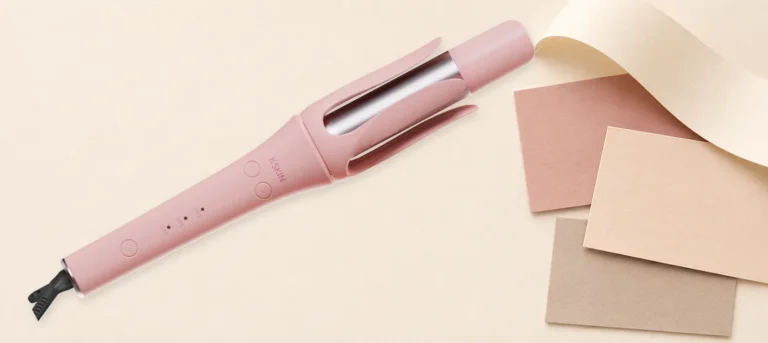
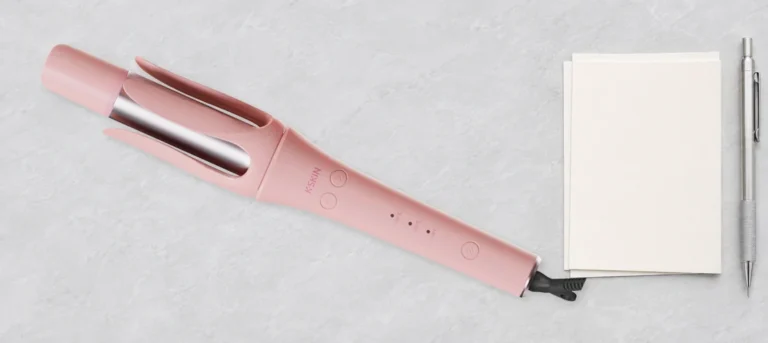
Some designs support bends or curls, depending on the plates, outer body and instructions. Include the required styling tasks in the sample brief before describing a particular model as multifunctional.
Does an Ionic Function Make One Tool Better?
An ionic function does not settle the comparison. Assess the main styling action first, then examine any specific ionic claim and the evidence for the selected version. The feature name alone does not prove less damage or permanent repair.
Should a Retailer Launch Both Formats Together?
A combined range can make sense when the products serve clearly different customer preferences. If the available budget or shelf space calls for a smaller launch, choose the better-defined customer need first. Additional models should add a useful role rather than repeat the same promise.
Conclusion
Choose the brush for a brushing demonstration or the flat iron for plate-controlled finishing. If both enter the range, give each a distinct task and check the claim on the sample you plan to sell.
🌐 Website: kskinglobal.com
✉️ Email: info@kskinglobal.com