Your team has chosen a beauty device concept, but the launch brief calls for a different grip, simpler controls and your own retail packaging. Which manufacturer can turn those requirements into a sample you can approve?
We reviewed home beauty device manufacturers by their relevant products, customization services and published development processes. Four companies offer starting points for private label and ODM projects. The profiles below examine how a brand can approach each one with an existing product, a reference sample or a new design requirement, then establish what the manufacturer will deliver.
- K·SKIN Global — Factory-direct manufacturing support covering product selection, private label, selected OEM/ODM development and the transition from approved samples to bulk orders.
- ACE-TEC — Home beauty devices with separate services for branding existing products, modifying designs and joint development.
- Wochuan — Beauty and personal-care devices with published customization and project-development processes.
- LecSnow — Home facial-care products with OEM and ODM cooperation options for brands exploring a product concept.
1. K·SKIN Global — Manufacturing Support from Product Brief to Bulk Order
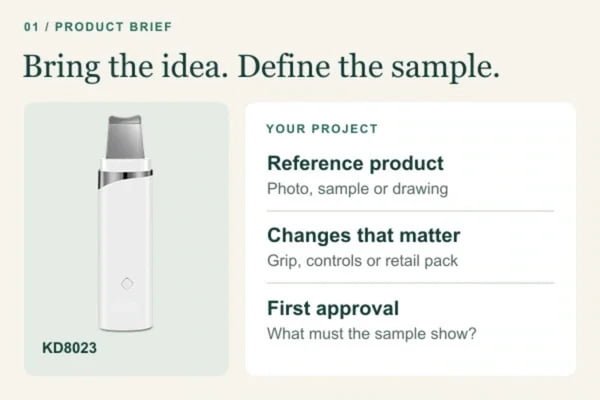
A brand can arrive with a working sample and a short list of changes. Another may have a retail buyer interested in a facial-care device but no model selected yet. K·SKIN Global supports both conversations through existing-product evaluation and development review. You can discuss the intended product, the changes that matter commercially and how the approved version will be supplied.
Start with the Product Your Customer Needs
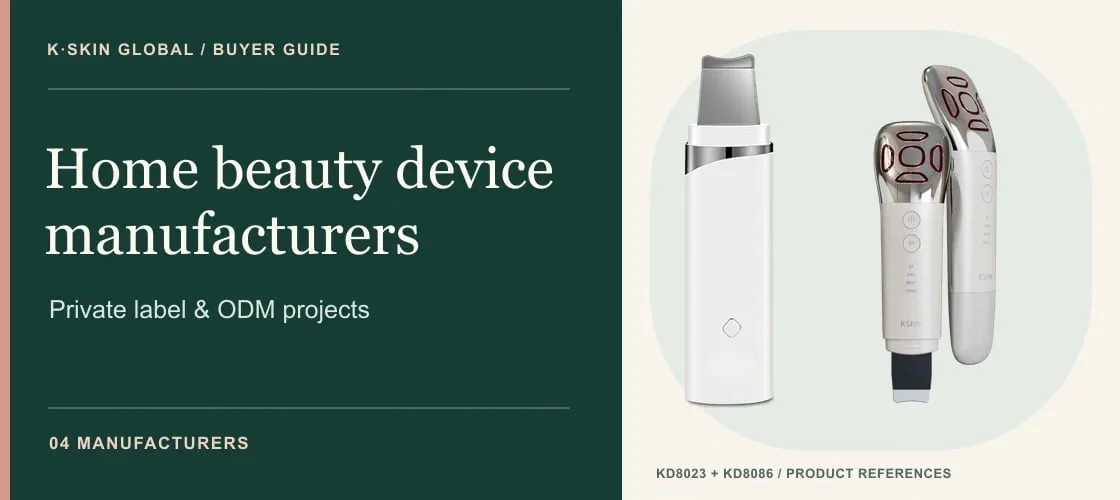
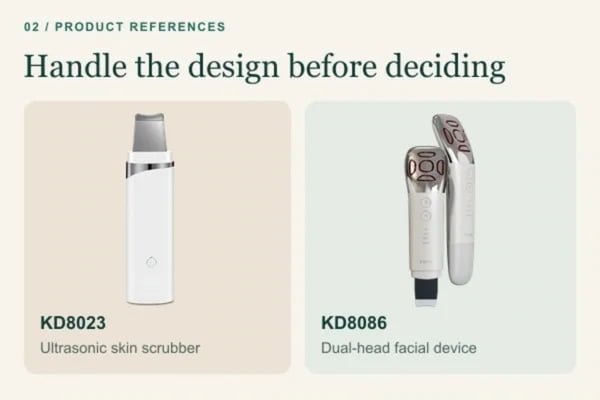
For a skincare brand adding a handheld cleansing device, the rechargeable KD8023 provides a concrete sample to assess. Its slim body and stainless-steel spatula give the team something to handle while discussing grip, controls and the space available for branding. Those observations can guide a sample request much more precisely than a general request for a “premium beauty device.” See the KD8023 ultrasonic skin scrubber.
A broader facial-care concept may lead to a different discussion. The KD8086 combines a spatula and a curved care head in one rechargeable unit. A brand can examine how customers would switch between the heads and follow the operating instructions before deciding whether the format suits its range. The KD8086 dual-head facial beauty device provides that reference.
These examples help open a project. If you already have another shape or use case in mind, send a drawing or reference unit with the features you want to retain. A clear commercial requirement helps the manufacturing team assess suitable products and the scope of any development.
Turn the Changes into a Sample You Can Approve
Some launches can move forward with an existing design and agreed branding. The buyer can review finish options, logo position, charging accessories and the retail pack against that model. A distributor purchasing for bulk supply may need to settle the version and pack contents first. A brand preparing a retail launch may also need artwork and instructions for its destination market. The private label options explain the adjustments to discuss.
Other projects require engineering work. Suppose your designer likes a reference device but wants a wider grip and fewer steps between switching it on and selecting a function. Mark the grip area on a drawing and describe the intended button sequence. That gives the team two specific requirements to review, including any structural, electronic or control changes involved.
For selected OEM/ODM projects, K·SKIN Global evaluates feasibility, development responsibilities, prototype arrangements and verification work. A grip mock-up can help settle how the device feels in the hand. A working prototype is needed to review the proposed control behavior. Agreeing on those deliverables helps purchasing understand what each sample payment covers. Review the OEM and ODM development process.
Connect Sample Approval with Manufacturing and Reorders
A brand needs the bulk order to reflect what its product manager approved. With K·SKIN Global, the production discussion can cover the agreed specification, assembly requirements, inspection plan and packaging reference before the order is released.
For example, a revised housing may change the space available for a charging connection or the fit of the retail insert. The approval needs to cover the finished unit and its pack together. The same reference then helps the quality team review the shipment and gives purchasing a starting point for a reorder.
Documentation belongs in that discussion as well. Share the destination market and the importer’s requirements so the team can identify available model-specific records and any additional review needed. A new design or electrical change may affect which documents remain applicable.
The value for a brand is being able to discuss these connected decisions with a manufacturing partner from the beginning. Product selection, engineering scope and production preparation can develop around the same commercial brief.
2. ACE-TEC — Private Label, ODM and Joint Development Options
ACE-TEC separates its cooperation services into private label, ODM and joint development. Its home beauty range gives brands existing products to consider, while its development services provide a route for requirements that go beyond branding.
This distinction is useful when a brand team has mixed several kinds of request into one rendering. A new logo, a revised handle and a different operating sequence may appear together on the same page, but they call for different sample work.
A buyer approaching ACE-TEC can separate those requests and ask which belong within the selected product’s private label scope and which require development. The proposal should identify the reference product, the changes included and the samples to be delivered.
Joint development also makes responsibilities worth discussing early. If the brand provides an industrial design, establish who will develop the structure, prepare prototypes and approve the production drawings. Clear deliverables make the cooperation route easier to compare with another manufacturer’s offer.
3. Wochuan — Customization across Beauty and Personal-Care Devices
Wochuan’s published catalogue includes facial cleansing devices, mist sprayers and RF/EMS beauty devices. Its cooperation information describes appearance and functional customization, along with stages covering design, sampling, production and inspection.
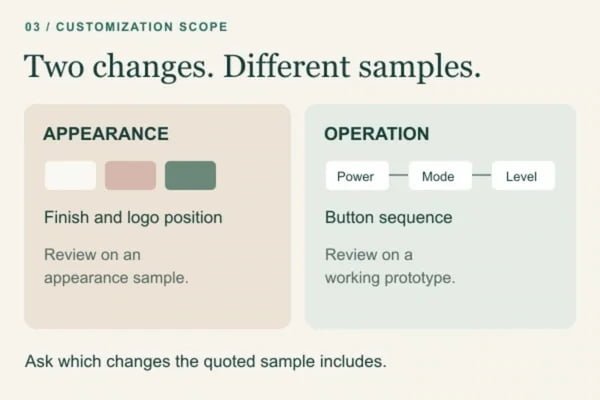
For a brand considering a multifunction device, the first useful task is to define which functions the intended customer will actually use. A long feature list can leave purchasing unsure about what it is commissioning and the packaging team unsure about what to explain.
An inquiry can identify the product reference, the required operating behavior and the physical changes shown in the rendering. Ask which parts of the proposal are already available and which involve design or validation work.
Wochuan’s published process provides a basis for discussing those stages. The practical next step is a model-specific proposal stating what the sample will demonstrate and what must be approved before production. Claims about skincare results need their own supporting evidence when the brand prepares its customer-facing copy.
4. LecSnow — Home Facial-Care Designs for OEM and ODM Discussion
LecSnow’s home beauty catalogue includes ultrasonic skin scrubbers and multifunction facial devices, with OEM and ODM service routes. A product team can use a named listing or image to open a discussion about the design it wants to evaluate.
The first inquiry should describe the intended customer routine as well as the appearance. A brand may like the shape of a multifunction unit but want a simpler daily-use product. Explaining which functions it wants to keep helps the supplier respond to the actual brief.
Ask for the corresponding model reference, current specification and available branding scope. If a structural or functional change is needed, identify the sample and development work separately in the proposal.
This is especially useful when comparing devices that look similar in catalogue images. The controls, working head, instructions and packing arrangement can make them quite different products for a retail buyer. A current sample gives the brand a practical basis for choosing which design to develop further.
What Should a Manufacturer’s First Proposal Include?
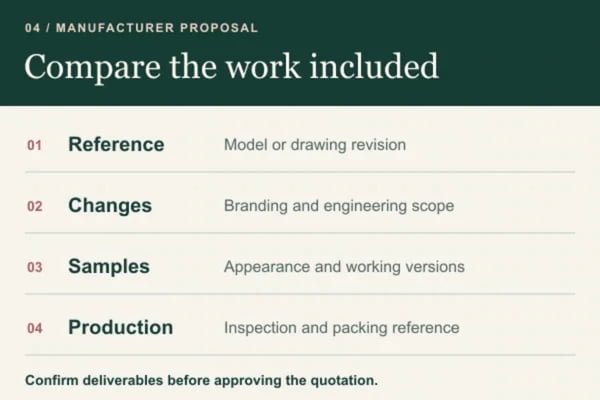
Once several manufacturers have received the same brief, compare the work each has included. One quotation may cover a stock unit with temporary branding. Another may include a revised housing sample and a printed retail box. The price only becomes meaningful alongside those deliverables.
| Manufacturer | Project starting point | Published support to discuss | What to establish in the proposal |
|---|---|---|---|
| K·SKIN Global | A product direction, existing model, drawing or reference sample | Bulk supply, private label, selected OEM/ODM development and production preparation | Product version, proposed changes, sample deliverables, inspection requirements and records for repeat orders |
| ACE-TEC | An existing beauty device or a concept requiring development | Private label, ODM and joint development | Chosen cooperation route, engineering responsibilities and approval stages |
| Wochuan | A beauty-device reference with appearance or functional requirements | Customization and staged development through sampling and production | Included functions, development tasks and what the sample is intended to demonstrate |
| LecSnow | A home facial-care design selected from its catalogue or supplied as a reference | OEM and ODM cooperation | Orderable model, available branding choices and the scope of any design changes |
For brands sourcing a facial steamer, our comparison of home facial steamer manufacturers looks more closely at available models, tank and nozzle requirements, branding options and sample deliverables. Use that category-specific review to refine the brief before requesting a quotation.
Make the First Sample Answer a Purchase Decision
Give the sample a clear purpose. If the unresolved issue is grip comfort, the team needs a representative shape to handle. If it is control behavior, purchasing should request a working unit that demonstrates the proposed sequence.
Before authorizing the sample, agree on the following:
- Identify the reference model or drawing revision.
- List the changes included in the sample price.
- State which elements will be functional and which will be appearance references.
- Define the accessories, instructions and packaging to be supplied.
- Name the person who will approve each part and record what remains open.
For tooling or engineering work, also discuss deliverables, ownership terms and how later changes will be quoted. That conversation is easier while the scope is still being agreed.
Buyer FAQ
Can We Start with Private Label and Develop a More Distinct Product Later?
Yes, where the selected product and project terms allow it. An existing design can help a brand assess handling, customer interest and its retail presentation. Later changes to the housing, controls or working head should receive a fresh feasibility review, with their own costs, samples and validation scope.
Does a Broad Product Catalogue Prove Development Capability?
A catalogue shows products the supplier presents. To assess development support, ask what the manufacturer will do with your specific requirement. A proposal identifying engineering tasks, prototype stages, responsibilities and approval criteria is more informative than a list of unrelated devices.
What Can We Send if We Have No Technical Drawings?
Send the intended market, customer routine, reference photos and the changes that matter most. Describe the problem in plain language. “The button is difficult to identify while holding the device” gives the team a useful starting point for discussing controls and grip.
Can a Certificate for an Existing Model Cover Our Modified Version?
Coverage depends on the document, the model and the changes involved. Ask which records apply to the proposed configuration and whether the revision requires additional assessment. Resolve the document scope before approving certification claims on the packaging.
Bring Your Home Beauty Device Project to K·SKIN Global
Whether you are preparing a first branded product or developing a more distinct design, tell us what the device needs to do for your customer. Include the target market, expected quantity and any reference sample, drawing or retail requirement already agreed.
Our team can discuss a suitable starting model, the changes worth evaluating and the sample work needed to move toward production. Explore the K·SKIN Global home beauty device range and share your project direction with us.
🌐 Website: kskinglobal.com
✉️ Email: info@kskinglobal.com