You have approved a styling brush for one market and want to sell it in another. Before reusing the order, find out whether the new market needs a different device setup, label, manual or set of supporting documents.
Start with the destination market, intended use and the business responsible for placing the device on the market. Then review the exact product version, including how it is powered, labeled, packed and documented. Check whether product registration or another local procedure applies, and give each market version an order reference your supplier, warehouse and sales team can follow.
What Changes When You Sell the Same Device in a New Market?
The base model may still fit your range. The question is whether the configuration you approved for the first market fits the second. For a corded styling tool, that means looking at the actual electrical ratings and plug, along with the rating label, instructions and pack contents. For a rechargeable device, the charging setup and included accessories belong in the same conversation. A change in plug shape leaves the device's electrical ratings unchanged.
Begin with the country or region, intended use and claims you expect to make on the pack and sales listing. Then identify the business that will import the device or place it on the local market. If the use or claims change, raise that before finalizing artwork. It gives the local team a chance to check whether the new offer changes how the product is classified or which requirements apply.
For multi-market beauty device SKU planning, record differences at the level your purchasing and warehouse teams can act on. For example, if two orders share a model name but differ in the approved electrical configuration and manual, a single undifferentiated item code makes the cartons easy to mix up. Give each sellable configuration a clear order reference and link it to the corresponding sample, packaging and documents.
Which Registrations and Documents Does the Launch Need?
A request for “the registration” may refer to several different tasks. Before chasing a document, ask what decision it needs to support and who is asking for it. A local authority, a trademark office and a retailer can each be asking a different question.
Check the product route and the local role
For beauty device product registration, start by checking whether the destination calls for a product registration, notification or another procedure for the selected product and its intended use. If a step applies, establish who can file, which version the filing covers and who will keep the records. For other requirements, the relevant evidence may include a declaration of conformity or supporting technical documents. Make a list for the actual market rather than passing the same file bundle to every importer.
An EU example shows why roles matter early. The EU's official product compliance guidance explains that importers need to check the applicable conformity assessment and documentation, markings and traceability information, as well as instructions and safety information in the required language where applicable. Use that as a prompt to ask who will confirm the requirements for your version and where the corresponding details belong on the device, packaging or accompanying materials.
Keep brand protection and channel paperwork on their own lists
Trademark protection concerns the brand identifier and the territory in which protection is sought. If you are changing brands or entering another market, identify the mark, the intended owner and where protection is needed. The World Intellectual Property Organization's trademark guide explains the territorial basis and the available routes for seeking protection abroad.
Retailer and marketplace requests can include listing materials, brand authorization or supporting product documents. Separately, your shipment team may need the commercial invoice, packing list and agreed order details. Record who asks for each item and when it is needed. This makes it easier to see which file is for local regulatory review, which is for channel onboarding and which travels with the order.
How Do We Match the Product, Label and Manual to One SKU?
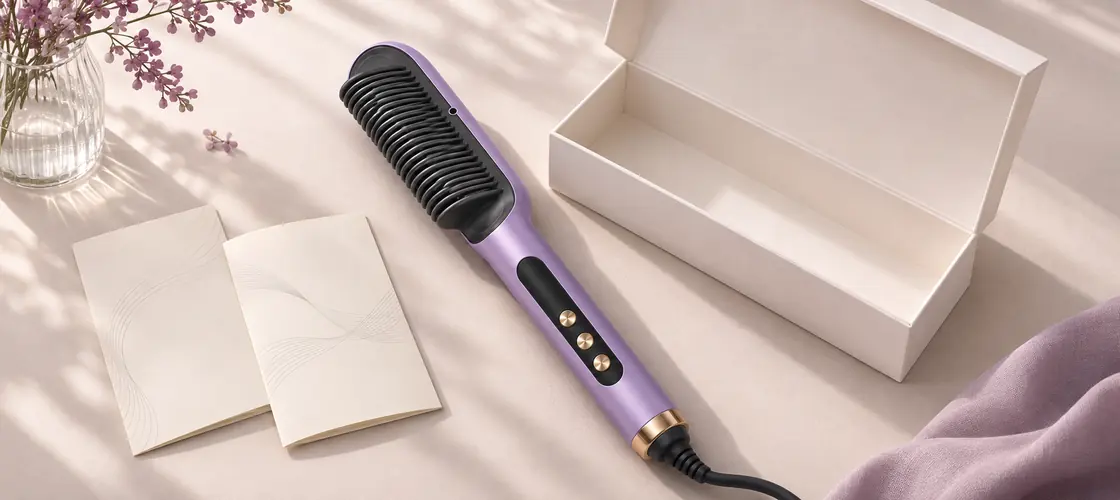
Start from the sample you intend to order and compare it with the label, manual and retail pack for that market. Read them together. The device identifier and rating should refer to the same version, the instructions should describe the controls and accessories actually supplied, and the carton or order code should identify that configuration for the warehouse.
What the KD380K project shows
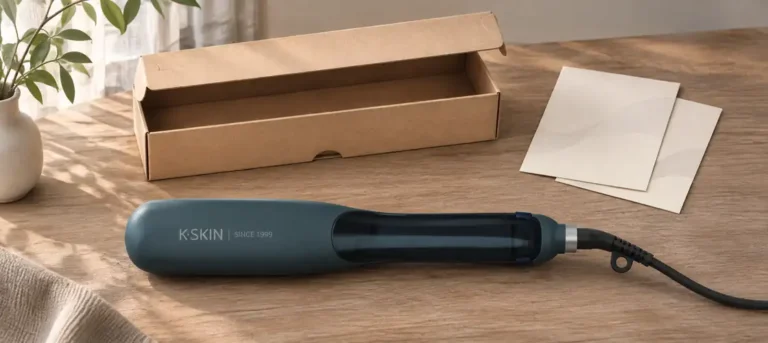
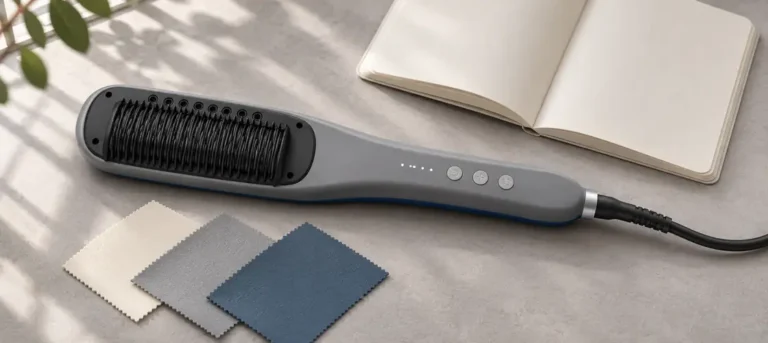
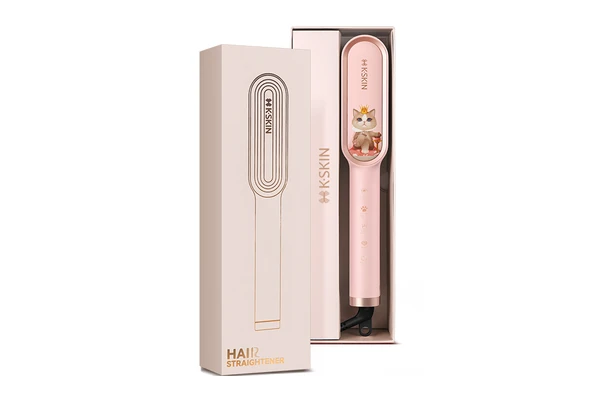
In a published KD380K private label project, a U.S. startup wanted to launch a branded styling brush. K·SKIN Global worked from the existing KD380K platform and coordinated the project's U.S. electrical configuration and plug, English instructions, retail packaging, and color and logo work. The product and the materials that went with it were part of the same launch preparation.
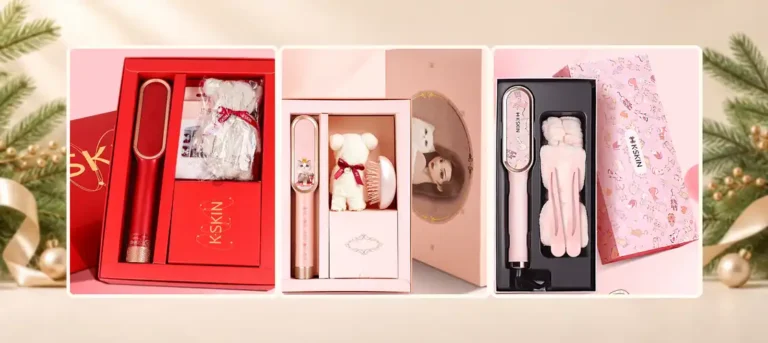
That gives buyers a practical way to brief a new project. Bring the base model and target market to the review, then confirm which configuration is proposed before approving copy, artwork and pack contents. On a Private Label project, we can discuss the available branding and retail materials for the selected version and align them with the approved sample.
Keep an order reference that follows the goods
For each beauty device market version, record the base model, order SKU, electrical or charging setup, pack contents, label revision and manual revision. Add the supporting document references and note any unresolved item. Use that reference on the purchase order and in your receiving instructions. If your team reorders six months later, it should be able to tell whether the old SKU still describes the version it needs.
If the sample reads one rating and the label proof or manual gives another, confirm the intended supply version before releasing the artwork. Then ask which proof or document needs updating. Where an existing report is being considered, check that it actually applies to the selected configuration. The Certifications & Compliance library can help you identify the document to discuss with us.
What Should Buyers Confirm Before Placing the First Order?
Bring procurement, the local market team and the supplier into one version review. Use the same reference for the model and configuration throughout. That way, one team can see whether its approval depends on a question another team still has open.
| Review item | What the buyer provides | What K·SKIN Global can help prepare | What to confirm before order release |
|---|---|---|---|
| Market and use | Destination, sales channel, intended use and proposed claims | Relevant product options and information for the proposed version | The product scope the local team will assess |
| Device configuration | Selected model, required power setup and included items | Proposed supply version, sample and available specifications | The exact device and accessory set in the order |
| Label and instructions | Required languages, local details and approved wording | Agreed label and manual proofs matched to the version | The ratings, device identifiers, warnings and instructions match the selected configuration |
| Registration or other local procedure | Known local requirements and the proposed responsible business | Available model documents and answers to version-specific questions | Whether submission is required, who handles it and what still needs to be resolved |
| Retail packaging and SKU | Brand assets, channel requirements and internal item references | Pack proof and confirmation of the agreed contents | The order, box artwork and carton identification refer to the same version |
| Shipment and receiving | Delivery and receiving instructions, including any distinction between market SKUs | Agreed packing information and order references | The warehouse can identify the correct cartons and the team knows which documents accompany shipment |
When you speak to us about a new market, share the exact model or sample reference, target country, intended use, sales channel and the business roles you have already confirmed. If your local team has a document list, send it with the brief. We can review the offered configuration and available model records, coordinate the agreed labels, instructions and packaging, and discuss what product information we can provide for any local filing. The filing role and any remaining local checks can then be agreed for that project.
FAQ
Can we keep one SKU if only the manual changes?
Check whether your warehouse and channel systems can identify which manual goes with each saleable pack. If you hold both packs at once or deliver them to separate markets, distinct order references can help prevent a picking error. Record the approved manual revision either way.
What if our marketplace asks for a file we did not expect?
Ask the marketplace to identify the document type and the product or version it needs to see. Then check which existing document matches the request and whether there is a gap. Put the request on the launch checklist with a responsible person and a due date.
Can a distributor begin reviewing documents before the sample is confirmed?
Yes. The distributor can list applicable requirements, identify the local roles and review available reference materials. Before relying on a particular record for the launch, match its model and scope to the version that will actually be supplied.
When should we approve printed packaging?
Review the digital proof early so artwork and layout questions can move forward. Approve the print version when the market-specific wording, identifiers and configuration are confirmed. If a rating or local detail is still open, keep that item visible on the proof until it is resolved.
To coordinate packaging preparation with sample approvals and production release, see our beauty device OEM development lead time guide. It explains which tasks can run in parallel and how open product decisions affect the schedule, helping you plan product and packaging work for each market version.
Conclusion
A new market launch is easier to manage when the device, labels, instructions and supporting records all follow the same order SKU. Confirm the product version and local responsibilities first, then use them to check the pack and documents before you place the order.
If you have a model in mind, share your target market and launch requirements with K·SKIN Global. We can review the proposed supply version and discuss the product information, labeling and packaging support available for your project.
🌐 Website: kskinglobal.com
✉️ Email: info@kskinglobal.com