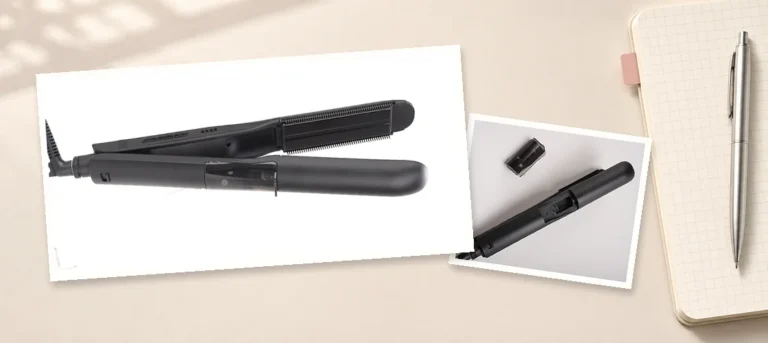
A regular flat iron straightens a section of hair between two heated plates. A steam flat iron uses the same motion and can add steam during the pass. What does that extra choice give your customer?
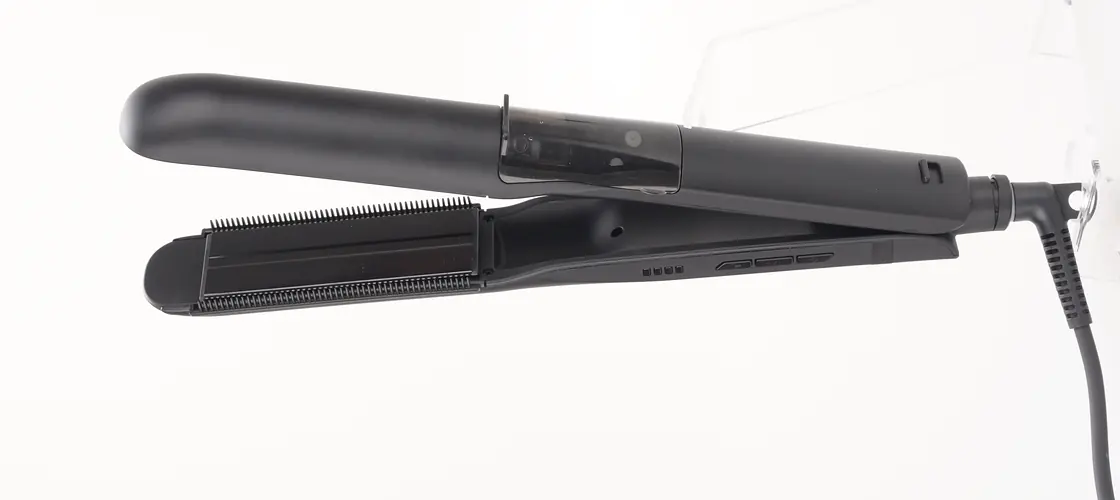
Keep a regular flat iron in your range for shoppers who want straightforward plate styling. For customers who want the option of steam, we recommend the K·SKIN KD258. It offers three heat settings and a separate steam switch. With steam enabled, closing the plates starts the output and opening them stops it. That gives shoppers control over the pass and retailers a difference they can demonstrate.
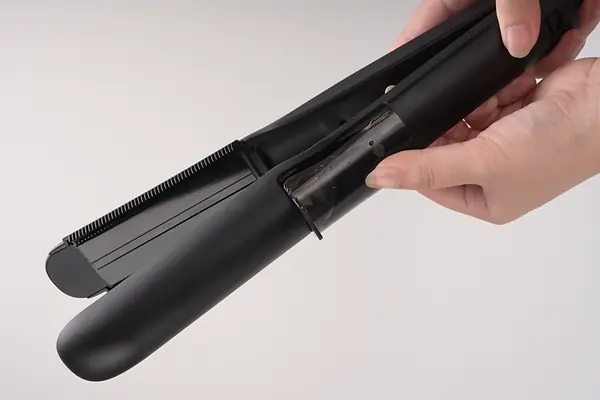
Picture the two products on the same shelf. A shopper picks up the regular iron and asks, “Do I need water for this one?” The answer is simple. Its heated plates do the styling, and there is no reservoir to fill. She picks up the KD258 and asks a more interesting question. “If I choose this one, do I have to use steam every time?” The separate switch lets her leave steam off. When she wants steam-assisted styling, she can enable it and use the same closing motion she already knows.
That is a good reason to carry both. Someone replacing a favorite everyday iron may value the simplicity of the regular model. Someone who likes using plates and wants to try steam has a reason to look at the KD258. She can keep the part of the routine she likes and decide when to add steam. For a buyer planning a range, that distinction is specific enough to put on a shelf card and meaningful enough to ask a customer about during a demonstration.
What Does the KD258 Give a Customer Who Already Owns a Flat Iron?
The strongest selling point is the separation between heat and steam. On the KD258 steam flat iron, the customer can select 160°C, 180°C or 200°C for the heated aluminum plates. Steam has its own control. A shopper deciding whether she wants steam can make that choice independently of selecting a heat setting.
Steam follows the movement of the plates
Imagine showing a shopper the tool halfway through styling a section. With steam enabled, the plates close and steam starts. As the plates open at the end of the pass, output stops. Between sections, the shopper can reposition the iron without having to operate the steam switch each time. If she wants to continue with the heated plates alone, she can switch steam off.
That sequence is the detail worth showing close up. A photograph of vapor tells a shopper the tool produces steam. A short view of the plates closing and opening tells her who controls it, when it happens and how it fits into styling. The distinction is particularly useful online, where she cannot pick up the iron and try the controls herself.
The reservoir and indicators make the controls easier to explain
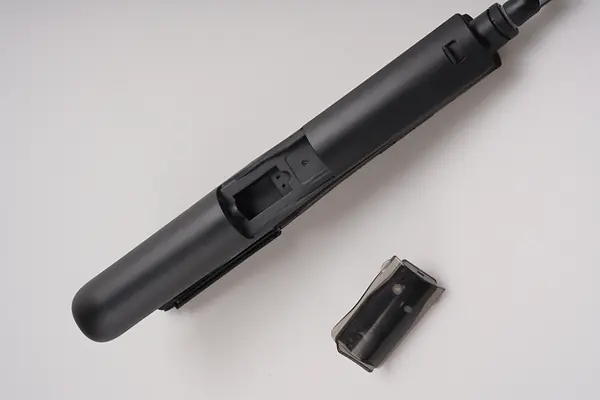
The KD258 has a removable reservoir. On a cool display sample, a customer can see the component that holds the water and how it fits into the handle. The indicator lights answer a different question. White indicators identify the chosen heat level, while a blue indicator identifies the steam function. A detail image with those two controls labeled can answer “Have I selected the temperature or turned on the steam?” before the customer leaves the product page.
The regular flat iron still has an advantage for someone who wants the shortest setup. There is no water system to prepare or care for. On the steam model, the useful service is to show exactly what ownership involves. Put the water and care directions from the supplied manual where a shopper can find them, and use a real reservoir photo. That gives her a fair basis for deciding whether the extra styling option is one she will use.
Which Flat Iron Fits Your Retail Channel?
Start with the question your customers actually ask. “I want a replacement for the straightener I already use” points toward an everyday regular iron. “Can I still use the plates on their own, and turn on steam when I want it?” is a much stronger lead for the KD258. If your existing product reviews, store conversations or distributor inquiries contain the second question, bring it into your next range review. It tells you more about the opportunity than counting how many straighteners you already stock.
| Buying situation | Where a regular flat iron fits | Where the KD258 adds value |
|---|---|---|
| A shopper is replacing a familiar tool | Heated plates and a water-free routine are easy to recognize. | Offer it when the shopper also asks about steam and wants to retain familiar plate handling. |
| A beauty store can demonstrate the product | Let the customer assess the grip and see how the plates meet. | Demonstrate the same pass with steam enabled, then open the plates so the customer can see when output stops. |
| An online customer is comparing two listings | Show the plate shape, controls and size of the actual model. | Lead with a close-up of the separate switch and a short clip of steam activation. The difference is visible even with the sound off. |
| A distributor is presenting a new SKU to retailers | The regular model can anchor the everyday straightening range. | A working sample gives the sales representative a distinct second option to put into a retailer’s hands. |
A higher retail price deserves its own check. Suppose the first two bullets on both listings are “heated plates” and “adjustable temperature.” A customer comparing prices still has to guess what the extra money buys. Put the KD258’s selectable steam and plate-linked activation where shoppers first compare the products. Then show both offers, at the intended prices, to people familiar with your channel. Ask which they would stock or buy and what tipped the decision. Their answer will tell you whether the added function matters at that price. A longer feature list cannot answer that question for you.
How Can You Compare the Samples and Learn Something Useful?
Bring the regular iron you already sell. Your team knows what its customers like about it, what the store promises and roughly where it sits on price. That makes it a better reference for a buying decision than a random second tool. With both samples on the bench, ask two questions separately. How does each handle the styling task? What does the KD258’s steam option add to the experience?
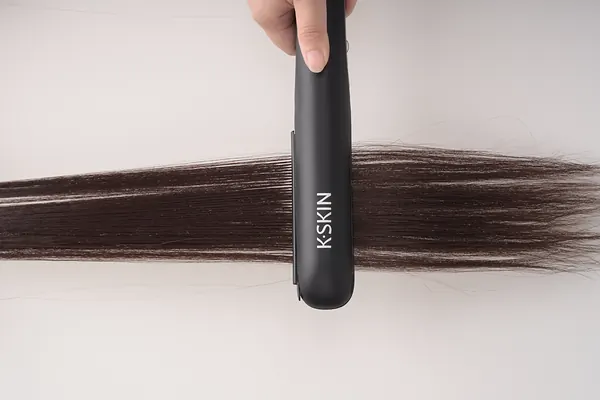
Give both irons the same styling task
Choose a finish your retail team would be comfortable showing in a listing, such as a straight section photographed from the same angle after styling. Prepare comparable tresses of the same size in a starting condition permitted by both manuals. Agree on the settings, operator and technique before the first pass. If you plan to compare time, decide when the clock starts. Time spent preparing the tool and time spent passing the plates over the hair answer different customer questions.
| What to compare | How to check it | How to use the observation |
|---|---|---|
| Plate grip and glide | Have the same operator work along matched sections. Note any slipping, catching or need to reposition. | Decide whether the KD258 retains the handling your existing customers value. |
| Finish and passes | Define the desired finish in advance. Count passes, photograph each result in the same light and repeat with fresh matched sections. | Identify what the team can reproduce before choosing a demonstration or writing a performance claim. |
| Heat and steam controls | Record the selected heat level. On the KD258, observe the indicator and steam response as the plates close and reopen. | Decide which control or movement needs a close-up in the retail listing. |
| First-time setup | Give a colleague the cool sample and its matching instructions. Observe how they identify and refit the reservoir and where they look for care guidance. | Use the first genuine point of hesitation to improve the quick-start illustration. |
If you specifically want to investigate what steam contributes, use the same KD258 sample with steam enabled and disabled under conditions allowed by its manual. Use fresh matched sections for each run. Comparing two different irons can tell you which complete product your team prefers, but differences in plate design, grip and temperature can also influence the result. Where actual plate temperature matters, measure it using an agreed method. The number selected on the handle is a setting.
One outcome is particularly useful to a buyer. Your team might like the finish from both irons and still prefer the KD258 for a steam-focused launch because customers can choose how to make the pass. That is a sound merchandising decision in its own right. A claim about faster straightening, fewer passes or reduced damage would need evidence specific to that outcome.
What Should Go on the Product Page and the Retail Box?
Give each asset a job. On the product page, the opening image should let the shopper recognize a flat iron. The next image can show what distinguishes this one. On a box, where space is tighter, a clear picture of the steam control beside the words “selectable steam” does more useful work than another photograph of styled hair.
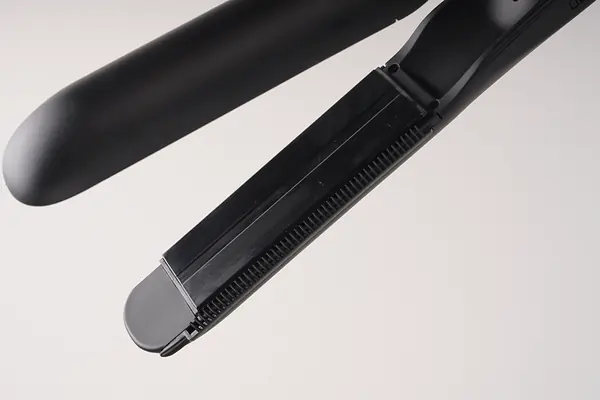
For an online demonstration, follow one complete pass using the operating conditions in the matching manual. Keep the switch and indicator visible before the plates close, then keep the camera on the tool as they reopen. A cut just as the steam appears loses the detail customers are most likely to remember. In a shop, the same explanation can be given with a cool display unit for handling and a separate staff demonstration where appropriate.
Put day-to-day questions close to the purchase decision. Can I turn steam off? How do I recognize the selected heat setting? Where do I find the instructions for filling and care? The first two belong beside the control images. The third belongs beside a reservoir detail and the directions approved for the version being sold. Reserve any before-and-after photography for results you can reproduce on the sample. A close-up of the actual KD258 already makes a persuasive point without promising a particular finish to every shopper.
How to Bring the KD258 Into Your Own Range
When you contact a supplier, describe the product that will sit beside the proposed steam iron. “We sell a regular straightener online and want a steam option we can explain in a short product video” is a more useful starting point than “Please quote your best flat iron.” It gives the supplier a comparison to work with and gives your team a reason for ordering the sample.
For a bulk supply inquiry, share your market, sales channel and expected opening quantity. Ask K·SKIN to identify the KD258 sample configuration, plug and pack contents in the quotation. For an own-brand launch, bring the same information plus your packaging or instruction-language requirements. Our private label service is a starting point for reviewing those options against the selected model.
Before placing the order, bring four items to the same review:
- Your current regular flat iron and a KD258 sample identified by version.
- Your team’s comparison notes and the short steam demonstration you intend to use.
- The proposed retail box and instructions, checked against the controls, reservoir and plug on the sample.
- A quotation identifying the configuration, included items and branding work you have agreed.
Frequently Asked Questions
Is a steam flat iron suitable for a range with room for only one straightener?
That depends on why people visit the category. If they mostly need a familiar replacement and choose on simplicity, a regular iron can serve that brief well. If your shop attracts customers interested in styling tools they can try at the counter, the KD258 gives you a feature worth demonstrating while retaining the familiar plate format. Try the demonstration at your intended price before allocating the shelf space.
Does a steam flat iron mean the customer can start with wet hair?
Steam describes a function of the iron. The permitted starting condition of the hair comes from the instructions for that model. Match your product copy and demonstration to the supplied KD258 manual before making a wet-to-dry claim or showing that routine.
Can a distributor use the same KD258 retail pack in several markets?
Start with the destinations you want the quotation to cover. Plug configuration, rating labels, language and supporting documents need to match each proposed order. You may be able to reuse the same product photography where the visible configuration matches, while adapting the pack and instructions for each destination.
For a structured review before entering another market, see our guide to selling beauty devices in a new market. It explains how to align the product version, labels, instructions and order references, and identify the local responsibilities and document checks for the proposed launch.
Conclusion
A regular flat iron earns its place by making plate styling straightforward. The KD258 gives customers who already like that format a reason to consider a second option. They can select their heat, choose steam and control its output through the movement of the plates. For a retailer, that is a benefit the customer can see at the counter, understand online and evaluate on a sample.
If that is the gap in your range, bring us the straightener you sell today, your target market and the sales channel you have in mind. Through our steam hair straightener sourcing page, we can discuss a KD258 sample, the configuration you want to compare and the bulk or branded pack you would like quoted.
🌐 Website: kskinglobal.com
✉️ Email: info@kskinglobal.com