Two photos of a finished curl can look much the same on a line sheet. Put the tools in a shopper’s hands, though, and the difference becomes clear as soon as she starts winding the first section.
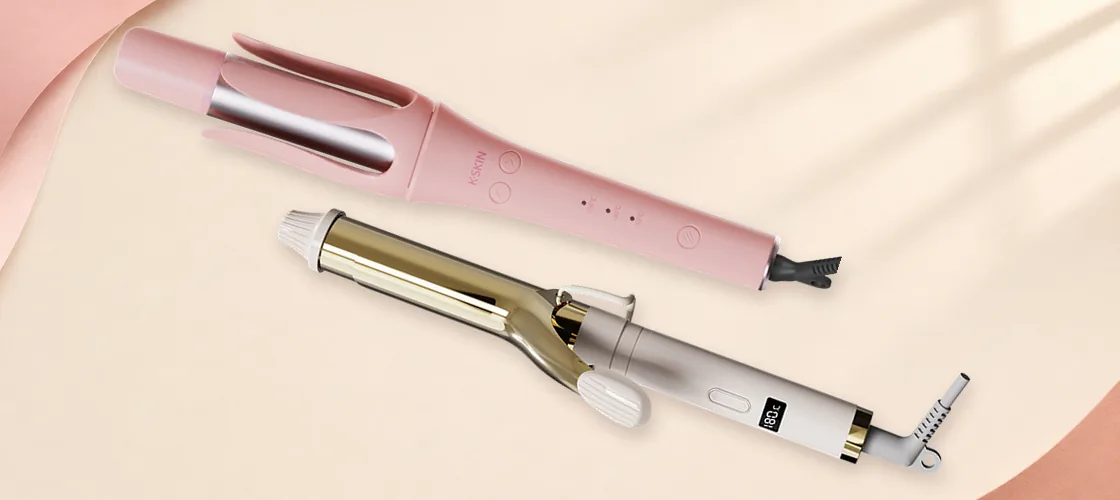
An automatic hair curler winds a prepared section at the touch of a direction button. A manual curling iron leaves the wrap in the user’s hands. If your customers like curls but struggle to wind both sides, we recommend sampling the K·SKIN Global K3. If they enjoy choosing where and how each wrap sits on the barrel, a manual iron deserves its place in your range.
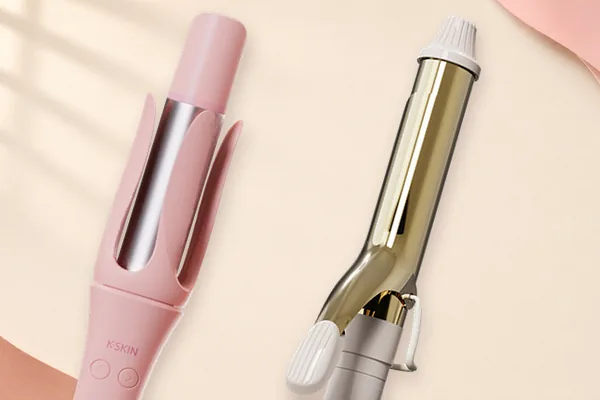
Consider the shopper who has a curling iron at home. Working on one side feels natural. When she changes hands or tries to curl the other side away from her face, she pauses to work out which way to turn the barrel. A second manual iron may give her a different barrel size, but she would still have to make that movement herself. The K3 changes that particular part of the routine. She places a section in the opening, chooses a direction and holds the corresponding button while the mechanism winds the hair. Releasing the button stops rotation. Taking the curl out is a separate movement.
Now picture a customer who likes to start her wrap farther down a section and see where the ends sit. Direct access to a manual barrel is part of what she likes about her iron. Those two shoppers could choose the same photograph as their desired finish and still buy different tools. For a product buyer, that is the strongest reason to consider carrying both.
What Does the K3 Automatic Hair Curler Do for the User?
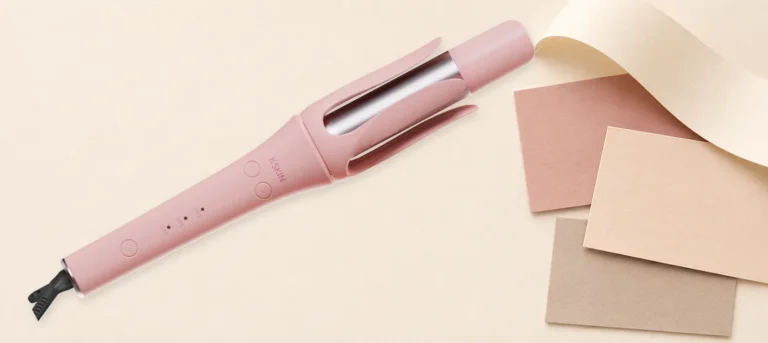
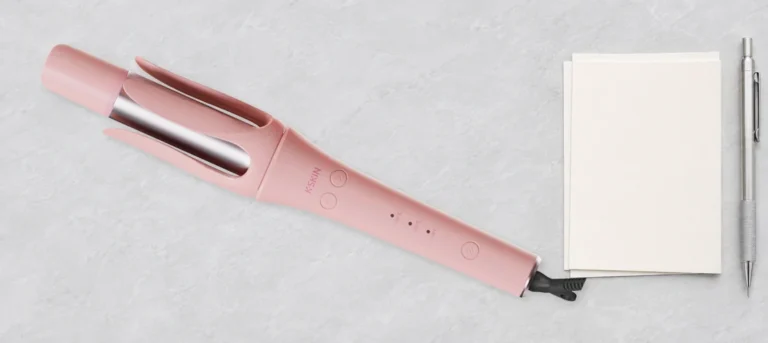
The useful feature of the K3 automatic hair curler is that the winding action has its own controls. The corded K3 has a guarded barrel, separate left and right rotation buttons and three selectable heat levels. Of those details, the two direction buttons deserve the first close-up. They explain what the customer gets that her conventional iron does not already offer.
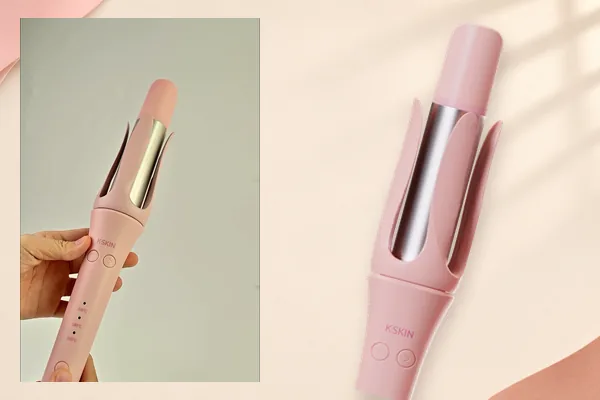
Where automatic winding helps
On a manual iron, the user coordinates the section, the clip or barrel, and the turn of her hand. The K3 takes on the winding movement after she positions the hair. That gives a shopper a specific reason to try it: she can choose a direction with her thumb while holding the handle, then stop the movement by letting go of the button. She still chooses and prepares each section. For someone who likes styling her hair and finds the wrist movement awkward, that division of work may be exactly the change she wants.
It also gives a store associate a useful question to ask: “Which part of curling your hair would you like the tool to do for you?” If the answer is winding, the K3 merits a demonstration. If the answer is making a curl last until evening, button-controlled rotation alone cannot answer her question. Your team would need wear observations under defined conditions before making that promise.
What a first-time customer still needs to see
The opening in the guard tells a customer where the hair enters. It may be less obvious how the finished section comes out. The K3 guide illustrates insertion and removal separately and specifies completely dry natural hair. For retail use, show the entire sequence on a suitable section, including the moment rotation stops and the point at which the hair is withdrawn according to the guide. A video that cuts straight from pressing the button to a finished curl leaves out the very movement a first-time buyer may want to see.
Why Choose a Manual Curling Iron?
A manual iron gives the user direct access to the barrel. She can see where the section meets it, decide how far along the hair to begin and guide the wrap herself. For someone with an established styling technique, that freedom is a practical benefit. She may be shopping for a particular barrel or clip feel and have little interest in changing the way she curls.
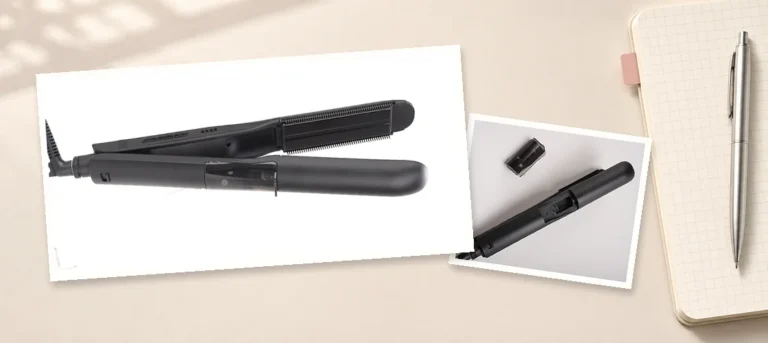
The curling iron attachment in the KD331D three-head styling set is a useful example. Its clip opens to receive the section. The user wraps the hair around the barrel, uses the clip to hold it and opens the clip to release it as directed in the manual. A close-up of that attachment makes the difference from the K3 visible even before either tool is switched on.
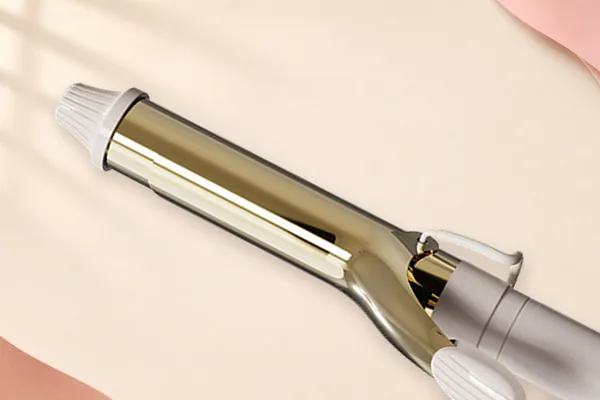
There are two buying decisions here. For a comparison of curling technique, use the KD331D with its curling head fitted. For a comparison of retail value, account for what is in each box. The KD331D also includes a straightening brush and a thermal round brush. A buyer considering it as a styling set is paying for several uses. If you want to know whether customers will pay more specifically for automatic winding, compare the K3 with the standalone manual iron you actually sell at its intended shelf price.
Where Would an Automatic Curler Fit in Your Range?
Look at what shoppers ask before buying your current curling iron. A question about how to wrap the back or the opposite side points toward an opportunity for the K3. Repeated questions about barrel size point toward a different opportunity within your manual range. If you have reviews or counter staff to consult, collect a few examples in the customers’ own words. They give your sample review a sharper purpose than a brief that simply asks for a new curler.
| Buyer’s situation | What to evaluate | What would support the buying decision |
|---|---|---|
| A beauty retailer already sells a reliable manual iron | Show the K3 to shoppers who hesitate over the winding movement. | They can identify what the automatic action would change in their own routine. |
| An online brand has little space to explain a new tool | Test a short, silent clip showing hair entry, direction selection, stopping and removal. | A first-time viewer can follow the sequence and describe the benefit without a voice-over. |
| A distributor sells through trained beauty advisers | Let an adviser demonstrate the K3 and the manual iron on comparable sections. | The adviser can recommend either tool from the shopper’s stated preference and show why. |
| A buyer has room for one item in a gift assortment | Compare a dedicated automatic curler with the full KD331D set at the proposed prices. | The choice reflects what the recipient is meant to get: help with winding or several styling formats in one box. |
A strong demonstration can make the K3 stand out on a crowded shelf. It still helps to test the proposition at the price you expect to charge. Give a retail colleague the two offers with their actual pack contents and proposed prices. Ask which customer they would approach with each, and what they would say first. If their explanation for the K3 is “it winds the section for you, and you choose the direction,” they have something concrete to sell. If both explanations come down to “it makes curls,” revisit the display before committing shelf space.
For buyers also reviewing straighteners, our steam flat iron vs regular flat iron comparison examines whether selectable steam gives a second model a clear role in the range. It explains how to demonstrate that difference and assess the offer at the intended retail price.
How to Compare Automatic and Manual Curler Samples
Bring the manual iron your team knows best. Decide on one task before opening the K3 box, such as making a curl in a chosen direction on each of two matched sections. Use comparable, completely dry natural hair suitable for both tools and follow the instructions for each sample. For the first round, focus on what the operator does with their hands. You can learn a great deal about product fit before making any judgment about the finished curl.
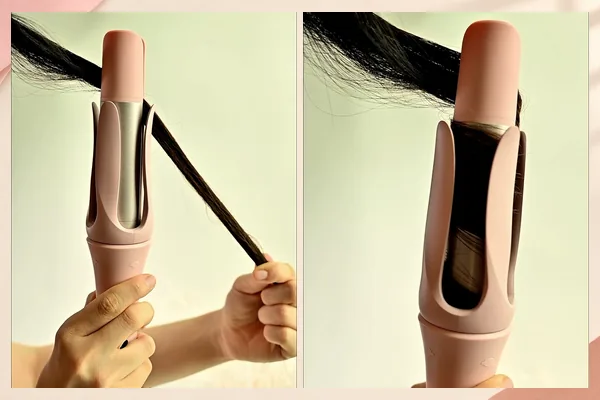
Watch where the first attempt pauses
Have a colleague familiar with the instructions demonstrate each tool. Then give a first-time evaluator the matching instructions and ask them to show you where the section goes, how they would choose the winding direction and how they would release it. Start with cool, disconnected tools for this walkthrough. During the subsequent styling trial, follow the corresponding operating directions. Record where the evaluator asks for help and what resolved the question.
Suppose the evaluator understands the K3 buttons immediately but asks how to withdraw the section. That points to a specific change in your retail materials: keep the release in frame at the end of the demonstration, then try the revised explanation with a fresh viewer. A different evaluator might handle the manual clip confidently and prefer seeing each turn on the exposed barrel. That observation identifies a customer worth keeping in your manual range. Neither observation gives you grounds to label one tool easier for everyone.
Compare the finish separately from ease of handling
Agree on the result the team wants to compare. Use fresh, comparable sections, record the heat level selected on each tool, and follow the exposure guidance in each manual. Photograph the sections after the same cooling interval, from the same angle and in the same light. Keep handling notes alongside the photographs. An operator can prefer the K3 controls even when the buying team likes the appearance of both curls equally.
If speed matters to your proposition, time the complete task, including section preparation, placement and release. If lasting hold matters, agree on a later observation time and record the conditions. A photograph taken at release can illustrate the initial shape. It cannot tell a buyer what the curl will look like several hours later.
What Should You Ask K·SKIN Global to Show You?
Start with the gap you want to fill. “We sell a clip iron online, and customers ask how to curl the other side” gives our team a useful basis for discussing a K3 sample. “We want one gift set that covers straightening, brushing and curling” points toward a KD331D discussion. Share your destination market, channel and expected opening quantity so the sample and pack information can be reviewed against the product you might actually order.
For your first sample request, four items are worth asking for together:
- The exact model, electrical configuration and instructions that match the sample.
- Clear product views of the K3 entry opening and direction controls, or the KD331D curling head and clip, depending on the format you are reviewing.
- A packing list that identifies the complete sellable unit, particularly when comparing a dedicated curler with a multi-head set.
- The available packaging and instruction-language options for your market, so your retail team can assess how it will explain the tool.
Frequently Asked Questions
Should an automatic curler replace our existing manual curling iron?
If customers buy your current iron for direct control over the wrap, it has a clear reason to stay. Sample the K3 alongside it when you can identify shoppers who want help winding and a way for them to see the difference. Their response to the two offers at the intended prices is more informative than the word “automatic” on a box.
Does releasing the K3 direction button release the curl?
Releasing the button stops rotation. Removing the hair is a separate step shown in the K3 instructions. Include both moments in staff training and product video so the customer can see the complete movement.
Is a guarded barrel enough to call an automatic curler burn-proof or tangle-free?
The guard is a physical feature you can show in a close-up. The K3 still has heated parts, and users need to follow the specified section placement and removal technique. A claim about burns or tangling would require evidence for that specific outcome. Describe the visible design and show the handling sequence a customer can follow.
What if our sample team prefers different tools?
Ask each person which movement influenced their choice. A preference for button-controlled winding and a preference for placing each wrap by hand can both be useful findings. Compare those reasons with the customer group you serve. You may have found two distinct product roles even if the team cannot agree on a favorite.
Conclusion
A manual curling iron gives the customer a barrel she can wrap in her own way. The K3 gives her another choice: place the section, select a direction and let the tool do the winding. If winding is where buyers hesitate with the product you sell today, that is a persuasive reason to put the K3 in their hands.
To explore that fit with K·SKIN Global, start with our hair styling tools range and tell us which iron your customers use now. With the current product, target market and sales channel in view, we can discuss the sample, operating details and retail presentation your team needs to make a buying decision.
🌐 Website: kskinglobal.com
✉️ Email: info@kskinglobal.com