If you already sell a curling iron, what would a thermal brush add? The answer depends on whether your customers want to change how their haircut falls or create curls they can place individually.
Choose a thermal round brush for a range built around shaping dry hair, particularly when customers want the ends to turn under and fall together. Choose a clip-style curling iron when they want to decide where a wave starts and how each section wraps. The K·SKIN Global KD331D gives buyers both heads on one handle, so each can be sampled against the finish customers actually want.
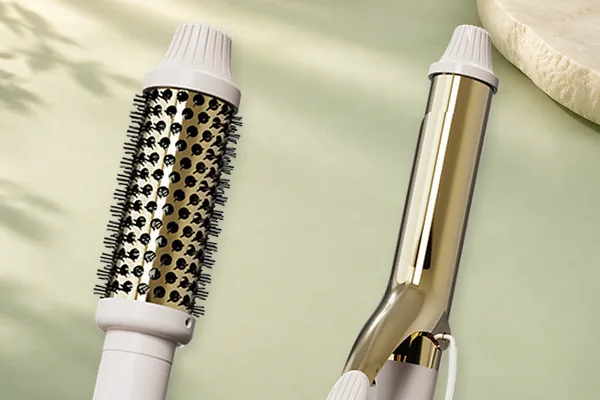
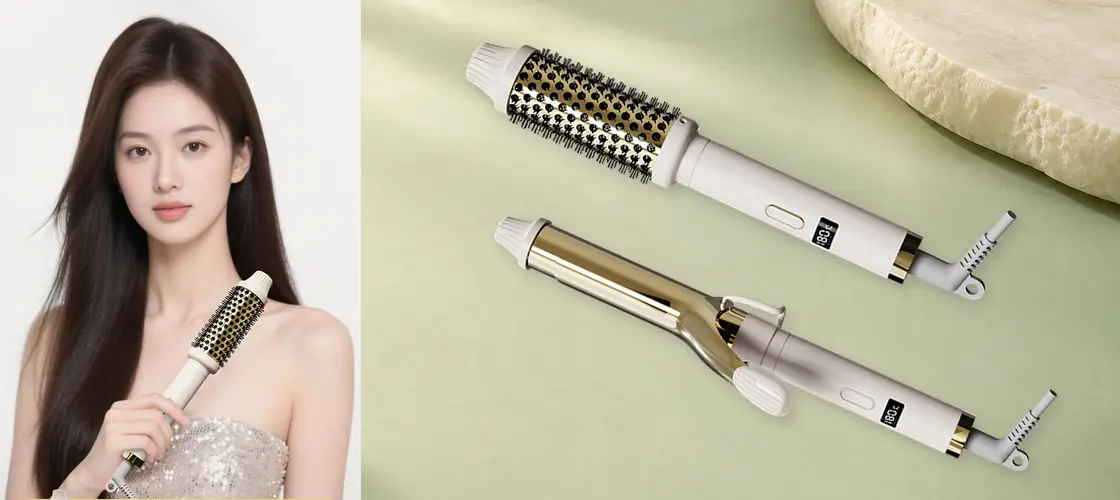
The two KD331D heads above show where that difference begins. On the round brush, the bristles guide the section as it travels over the curved barrel. The operator shapes the hair while drawing the brush through the ends. On the curling iron, the clip holds a section against the barrel, and the operator decides where to place the wrap. One motion guides hair through the tool. The other holds it in position and then releases it.
That changes what a buyer should examine when the tool is put down. For a rounded bob, let several adjacent sections fall back into the haircut. The question is whether their ends form the intended line together. For a face-framing wave, pick up one released section and look at where the first bend begins. A neat curve at the very tip might be a good result in the first trial and miss the brief entirely in the second. A buying brief that says only “soft waves” leaves that decision to whoever happens to demonstrate the sample.
When Does a Thermal Brush Fill a Gap in a Styling Range?
A thermal brush is worth sampling when the customer wants to keep the overall look of her haircut and change how part of it sits. Shoulder-length ends that she wants to turn inward are a useful example. She may already own a curling iron and have little interest in producing a head of individual curls. The appeal of the brush is the shaping action she can add to a dry-hair routine.
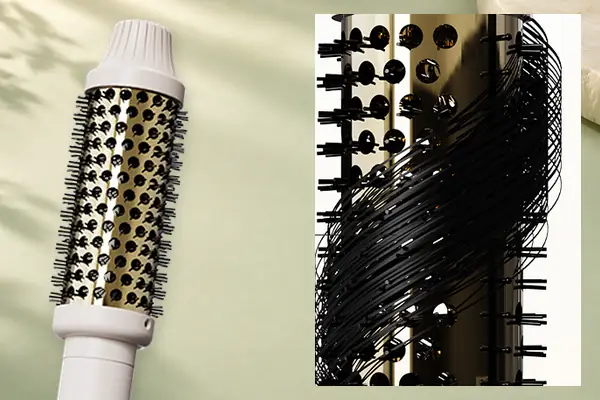
The bristle detail above is useful because it shows the path available to the hair. It also tells a buyer what the photograph alone cannot settle. How readily does a section enter the bristles? Can the intended user maintain contact through the ends and then draw the brush free without disturbing the bend? Those are handling questions. Try them with hair representative of the intended customer, within the instructions for the selected model. A close-up of the hardware gets you as far as a sensible sample request.
Define what “volume” means before sampling
A fuller outline through the lower lengths and visible lift near the roots are two different product briefs. Turning the ends under can change the outline around the shoulders while leaving the roots much as they were. If your retail description promises root lift, a demonstration of rounded ends leaves the main claim unanswered.
Ask the range buyer or merchandiser to finish this sentence: “After styling, the customer should see a change at ___.” If the answer is “the ends,” assess how neighboring sections sit together after release. If it is “the roots,” agree on a suitable evaluation of that area before choosing the claim. This is especially important for the KD331D. Its round brush is a heated attachment for completely dry natural hair. A customer looking to dry damp hair and build shape at the same time has a different requirement.
When Does a Curling Iron Deserve the Lead?
A clip-style iron makes sense when placement is part of the look. A customer may want the upper lengths to stay relatively straight and a wave to begin farther down beside the face. On the KD331D curling head, the exposed barrel gives the operator a view of where the section sits. The clip holds it there during the wrap. That control is a reason to choose the iron even for someone who wants a loose finish.
In the sample review, pay attention to the first turn and the release. Can the evaluator start the wave where intended on two neighboring sections? Can they reach the thumb lever in their chosen grip and open the clip without pulling the finished section out of shape? If the lower half looks right but the first bend starts too high, record that distinction. “Good curl” gives the product team little to work with. The location of the mismatch tells them what to repeat and what to change.
There is also a straightforward commercial reason to keep a manual iron in the range. If inquiries about your current model consistently concern barrel size or the feel of the clip, customers are asking for a change within a familiar format. A heated round brush addresses another styling preference. Before allocating a shelf position to it, look for evidence of that preference in store conversations, product questions or feedback from your distributors.
If customer feedback points to difficulty winding a section, our automatic hair curler vs curling iron comparison examines another option within the curling category. It compares button-controlled winding with manual wrapping and explains the preparation, controls and removal movements customers still need to understand.
How to Compare the KD331D Attachments on One Handle
The KD331D three-head styling set contains a heated round brush, a curling iron and a straightening brush. The shared handle gives the evaluator a familiar grip and control layout as the attachment changes. Use that advantage to concentrate on contact, release and the finish each head can produce. The same displayed setting does not establish that two different contact surfaces are at the same measured temperature.
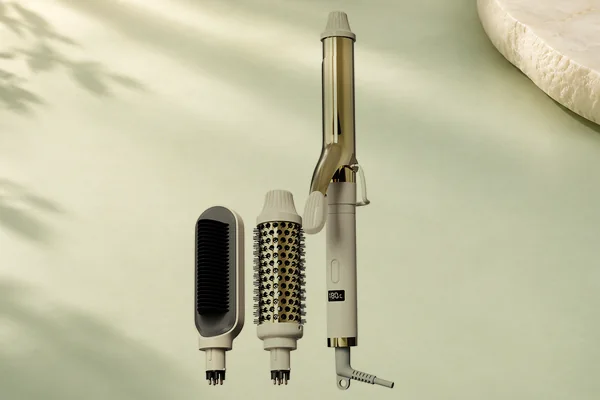
Set aside comparable sections of completely dry natural hair and keep a fresh section for each run. Record the attachment, selected setting, operator and approximate section size. Follow the matching manual throughout. To change KD331D heads, switch off, unplug and let the tool cool completely before removing or fitting an attachment.
| Sample task | What to observe | What the finding changes |
|---|---|---|
| Shape the ends of several adjacent sections with the round brush. | After release, do the ends fall in the intended direction together? Note any second pass or hand finishing. | A repeatable bend supports a rounded-ends demonstration. Extra finishing changes what the customer needs to see and do. |
| Place a wave at a chosen point with the curling iron. | Compare where the first turn begins, how cleanly the clip releases and the shape of the section after cooling. | If placement is repeatable, the iron has a clear role for customers who want to shape selected sections. |
| Ask a second evaluator to reproduce the preferred look from the supplied instructions and proposed demonstration. | Identify the first movement that requires help, then repeat with that movement clearly shown. | If the explanation resolves the issue, revise the retail material. If the result still depends on a skilled operator, reconsider an easy-styling claim. |
Decide what to do with a mixed result
Suppose the round brush produces the intended curved ends, but only after an experienced stylist revisits each section and arranges the ends by hand. The sample has shown that the finish is achievable under those conditions. It leaves a separate question open: can the customer you sell to reproduce it as part of the everyday routine you intend to advertise? Before approving a quick-styling message, repeat the trial with that routine and count the extra work. A more accurate demonstration may be all the project needs.
An equally useful outcome is that the iron produces a pronounced curl and the merchandising team prefers the wave left after brushing it out. Record that finishing step as part of the product presentation. Compare samples after the same cooling interval and under the same lighting. If lasting hold affects the buying decision, agree on a later observation time. A freshly released section can answer a question about shape. It tells you little about how that shape will wear through the day.
Which Result Should Lead the Retail Offer?
For a standalone range decision, judge the proposed tool against the item it would sit beside or replace. For a KD331D project, the purchasing unit is a three-head set. You can lead the product page with the most relevant attachment while showing all three supplied heads near the price and packing information. That distinction matters when buyers compare quotations or when shoppers check what they will receive.
| What the customer is buying | What should lead the offer | What to confirm before committing |
|---|---|---|
| A dry-hair tool for turning the ends under | The round brush and the overall outline it creates through adjacent sections | An intended user can reproduce the finish with the steps shown. |
| A tool for placing individual waves | The curling head, its clip and the position of the wrap | The curl begins where intended and releases in a form that suits the brief. |
| A set for both everyday shaping and occasional curls | The complete KD331D set, with the channel’s preferred finish featured first | The sample, product page, box contents and quotation all describe the same configuration. |
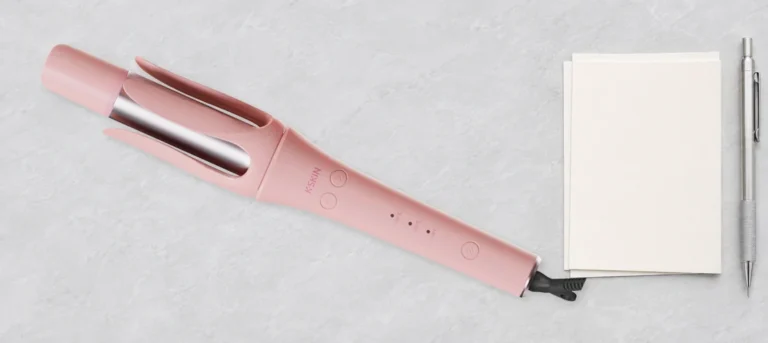
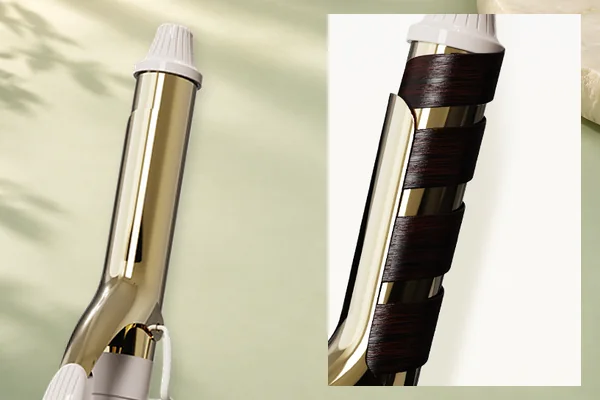
The image above is enough to explain where the clip sits and how hair can wrap around the barrel. A finished-look claim needs a corresponding demonstration. For the brush, carry the shot through release so the viewer can see how the ends fall. For the iron, show the section after any brush-out or hand finishing. One honest sequence can do more for a buyer’s confidence than several polished images taken at different stages.
For an own-brand pack, settle the lead styling task before committing to artwork. K·SKIN Global can review the selected KD331D version, packaging brief and instruction-language requirements with your team. If your brief calls for a separately packed tool or attachment, identify that requirement in the inquiry so the quotation covers the offer you intend to sell. Private label options
Frequently Asked Questions
If both heads can create a wave, how should we choose between them?
Start with the feature of the wave your customer cares about. For a bend that blends into the lower lengths, assess several sections together after using the brush. For a curl with a deliberate starting point, assess the placement and release of each section on the iron. If both tasks matter to your channel, evaluate the full set and assign each head a clear role.
What if our buyer wants a “blowout look”?
Ask whether the term describes the finished silhouette or an expectation that the tool will dry wet hair. For the first brief, the KD331D round head can be evaluated on dry hair against the desired silhouette. The second brief includes a drying function that this heated attachment does not provide.
Can one sample session support claims about ease of use?
It can reveal which movements need explaining and whether a particular evaluator reproduced the result. Keep the operator’s experience and any coaching in the record. Claims covering a wider customer group need evidence from that group. For an initial buying decision, an accurate account of the movement that needed help is more useful than a general “easy to use” score.
What should we send when asking for a sample?
Identify your current product, destination market, sales channel and proposed pack. Add the finish you want to assess and specify where on the hair you expect to see it. A request for “an inward bend through shoulder-length ends, on completely dry hair” gives the team a much clearer starting point than “a tool for volume.”
Conclusion
If the gap in your range is everyday shaping through the ends, sample the thermal round brush first. If buyers want to place defined waves on selected sections, give the clip-style curling iron the lead. Where both needs are present, the KD331D lets you evaluate them on one handle and sell the complete set with a specific purpose for each attachment.
To discuss a sample with K·SKIN Global, start with our hair styling tools range and share the product you carry today and the styling task it leaves unanswered. That gives both teams a concrete basis for selecting the sample, reviewing its configuration and deciding what belongs on the shelf.
🌐 Website: kskinglobal.com
✉️ Email: info@kskinglobal.com