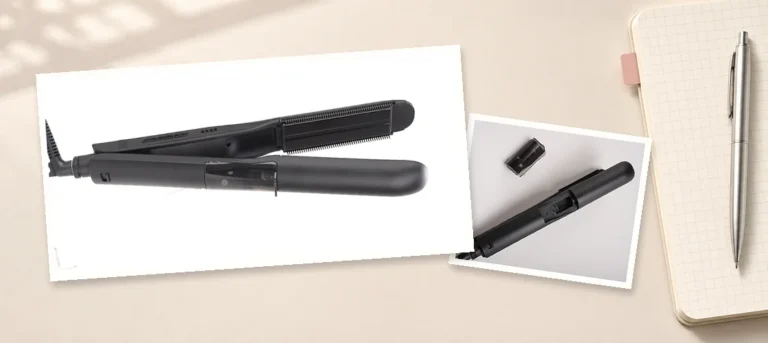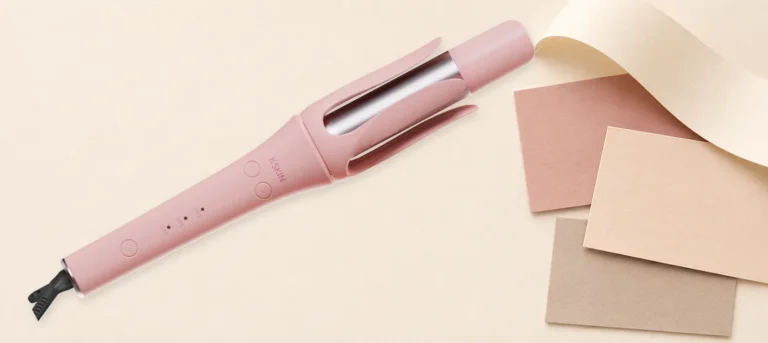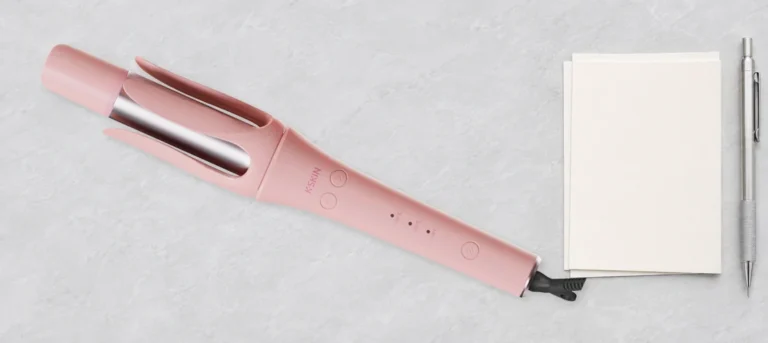
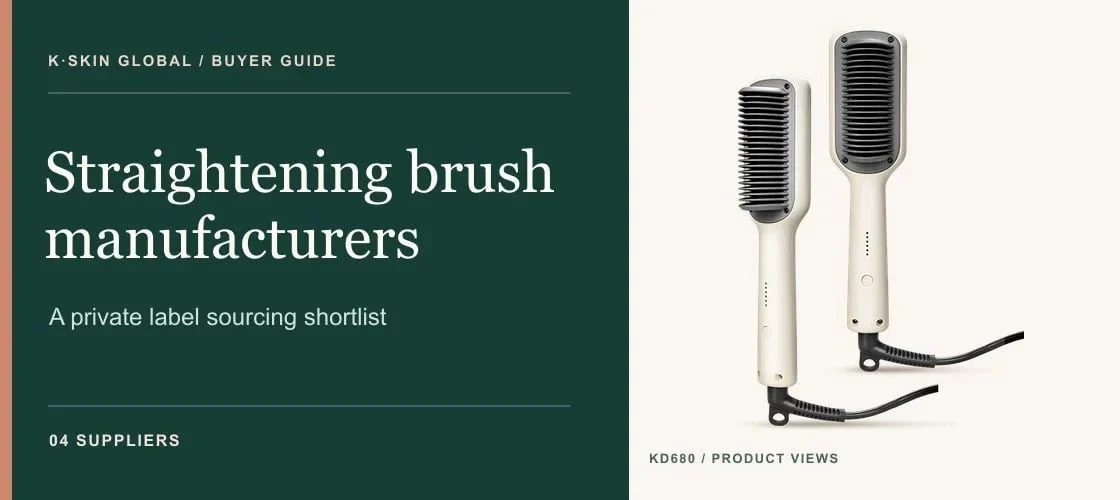
A product photo can tell you whether a brush looks right for your range. Before you spend money on a branded sample, you also need to know which model you can order and what the supplier can change.
We reviewed suppliers’ published brush catalogues, individual model pages and private label programmes to see which companies are worth contacting for a branded straightening brush. We looked for identifiable base models, clear customization options and enough information to request a sample for the intended market. Four suppliers stood out for the following projects.
- K·SKIN Global — Factory-direct sourcing for brands moving from a brush sample to a private label order, bulk supply or a selected OEM/ODM project.
- UTRUST — Customization options for buyers working from a specific heated-brush design.
- Bidisco — Straightening brushes for distributors building a wider range of hair tools.
- MESKY — Ceramic straightening brushes with color and retail packaging options.
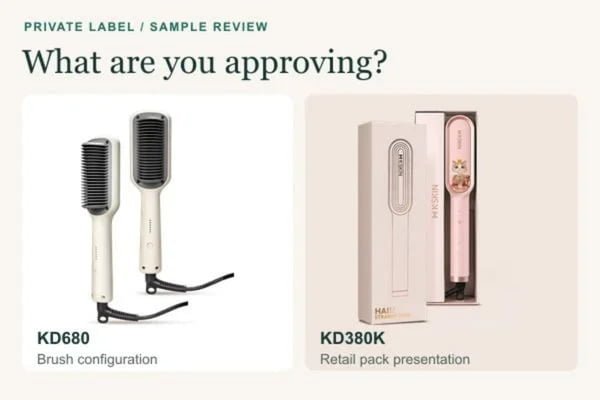
1. K·SKIN Global — Factory-Direct Manufacturing for Private Label Brands
A buyer who approves a brush on Monday and requests a different plug on Friday needs someone who can explain what that change means for production. Will the electrical rating stay the same? Will the plug still fit the insert? Which sample should the factory use when it packs the order? This is where working directly with the manufacturing team makes a difference.
K·SKIN Global gives international buyers a factory-direct route for hair straightener brush projects. Our export team coordinates the commercial brief with the people responsible for the selected product. Buyers can discuss the model, proposed changes, inspection requirements and retail pack together, while there is still time to change the specification.
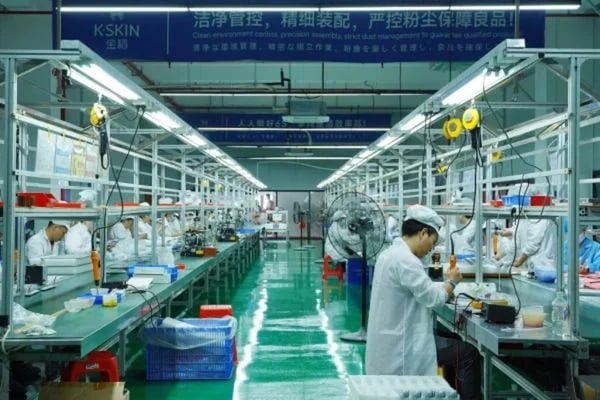
What the Factory Works From After You Approve a Sample
Consider a brand preparing a corded KD680 brush for retail. The product team may have approved the shape and controls, while purchasing has yet to settle the market version and packaging. A useful production reference ties the physical sample to the agreed electrical rating, plug, finish, label, instructions and pack contents. If the plug changes, the team knows to revisit the electrical specification and check the fit inside the box before releasing the artwork.
The inspection plan follows the product. For a corded brush, cord assembly and electrical checks belong in the discussion. A rechargeable brush raises different questions about charging and operation. The buyer and factory can agree which checks apply, how a result will be judged and what records will be needed for the order. That gives your quality team something specific to review when the goods are ready. Our manufacturing and quality control process shows how the approved reference carries through assembly, inspection and packing.
Bulk Supply, Private Label or OEM/ODM?
The right route depends on how much of the brush you want to change. A distributor ordering an existing model for bulk supply can usually start with a short brief: the intended market, electrical version, pack contents and quantity. With those details settled, the quotation has a clear basis.
For private label, the starting point is still an existing brush, but the buyer also needs to approve what the customer will see and receive. Suppose the base sample suits your range and the changes are a new finish, a logo on the handle and a bilingual box. Ask for the decoration method, artwork position and packaging reference to be identified against that sample. Your designer can then prepare the correct files, and purchasing can see which changes the price includes. See the private label options and approval steps.
A different brush head, heating system or control layout takes the project into OEM/ODM development. For selected projects, we review feasibility, tooling implications, engineering responsibilities and the samples needed to validate the change. At this stage, a description of the problem you want to solve is often more useful than finished artwork. It gives the manufacturing team room to assess whether an existing platform can accommodate the idea or a new design is needed.
What Support Can Your Compliance Team Expect?
If an importer or retailer needs documents for a supplier review or a market registration, send the request against the exact brush and destination. K·SKIN Global can help identify the available manufacturer details, specifications and supporting records. This lets your compliance team see which parts of its file are covered and which require further work.
For example, if your retailer asks for RoHS documentation for the KD880, include the model code and the version you intend to order in your request. Your reviewer can then check which configuration the report covers and what additional records the retailer needs for electrical safety. You can start with our credentials and product documentation.
2. UTRUST — Model-Specific Options for a Branded Heated Brush
UTRUST makes a useful distinction on its HSB-303 product page: it describes a basic build and separately identifies optional finishes, components and branding choices. For a brand that has already selected this style of brush, that makes the first quotation easier to frame. Ask for the base configuration, then itemize the changes you want priced.
A custom body color and a logo on the handle illustrate why that matters. An undecorated sample may be enough to assess the grip and controls. It tells your design team little about how the logo will read against the final finish. Before ordering a decorated unit, agree on the finish reference, marking position and which details the supplier will reproduce on the sample.
UTRUST also lists the cordless RSB-01. If that is the model under consideration, start with its own configuration sheet. Options published for the HSB-303 are a useful illustration of the questions to ask, but the actual order should identify the choices available for the selected brush.
3. Bidisco — Straightening Brushes Within a Wider Hair-Tool Range
Bidisco’s catalogue includes the Q20 straightening brush and C516 cordless comb alongside other hair tools. The company describes OEM/ODM work involving color, materials and packaging. For a distributor buying several tools for the same retail line, the practical question is whether the proposed models can share the intended finish and packaging design at the planned quantities.
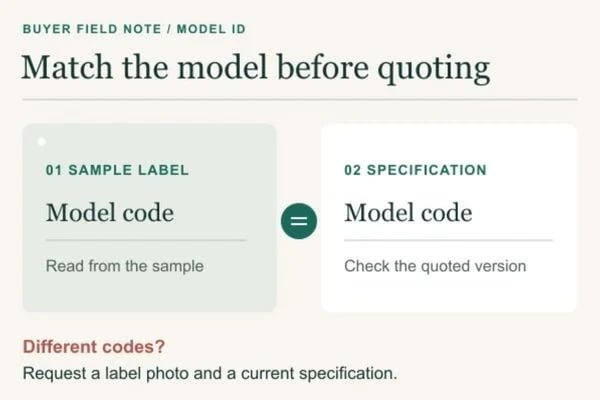
One detail is worth settling before requesting the Q20 sample. In the listing reviewed on November 3, 2026, the title identified Q20, while a parameter table farther down the page named C19. A current Q20 specification and a photograph of the corresponding sample label would resolve which dimensions and electrical data belong in the purchasing brief.
That distinction matters as soon as someone acts on the numbers. A packaging designer needs dimensions for the brush that will actually go into the insert. The buyer needs an electrical rating for the version being quoted. Getting those two references aligned takes priority over comparing individual feature claims.
4. MESKY — Ceramic Straightening Brushes and Branded Retail Packs
MESKY presents a ceramic brush with straightening and curling functions and lists color customization. Its wider straightening-brush material also describes logo, packaging and plug options. That gives a brand planning a gift set a concrete place to begin: identify the brush, show the proposed box or pouch and ask what the supplier can deliver as one packed item.
The category includes blow-dryer and hot-air brushes as well as straightening products. The ceramic brush listing reviewed uses a descriptive product name in its specification section. Including the product image or listing reference in the inquiry and asking for the orderable model code helps both sides price the same item.
For a branded pack, it is also worth asking what the first sample will show. A stock brush in standard packaging can answer questions about handling. To approve the gift set, the buyer still needs the proposed finish, insert, instructions and accessories represented in the packing reference.
What to Ask Before Paying for a Branded Sample
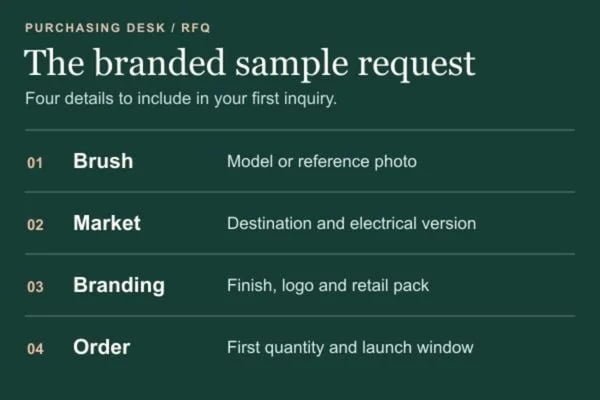
Two quotations can look surprisingly far apart when one covers a standard brush in a plain carton and the other includes a custom finish, printed insert and retail box. Ask each supplier to identify the sample it is pricing and the version it expects to supply in volume. The questions below follow directly from the four product and cooperation descriptions reviewed.
| Supplier | Reference for the first inquiry | Question that makes the reply more useful |
|---|---|---|
| K·SKIN Global | Target market and an existing brush or proposed design change | Which production version, inspection plan and available market documents would apply to our order? |
| UTRUST | HSB-303 or another named platform | Which features are standard, and which branding options are included in the sample price? |
| Bidisco | Q20 or C516 | Can you match the current specification and electrical rating to the sample label? |
| MESKY | The specific ceramic brush and intended retail pack | What model code should appear on the quotation, and what will the packing sample contain? |
If your planned retail copy includes “wet-to-dry” styling, put that claim in the sample brief and ask for instructions and supporting evidence covering the selected version, starting hair condition and operating mode. Our guide to reviewing wet-to-dry hair styling claims explains what to check before approving the wording, packaging or demonstration.
Give the supplier your expected first-order quantity and launch window, even if both are provisional. A useful reply will distinguish the time needed for a standard sample from the time needed after artwork approval. If your deadline is a retailer’s packaging review, say so. A working brush arriving without its proposed box will leave that particular decision open.
Buyer FAQ
How Can I Tell Who Will Manufacture My Branded Brush?
Ask for the manufacturing entity and site for the specific model, together with the company that will handle your order. Compare those details with the product documents and establish who can approve a technical change. That gives your purchasing and quality teams a named contact if the production version needs review.
What Should a Private Label Brief Include?
Start with the brush format, target market, sales channel, expected quantity and timing. Describe the changes that matter to the launch, such as a branded handle, a market-specific plug or a retail pack in two languages. A rough packaging sketch can explain the job more clearly than a long list of customization terms.
Which Records Should I Request for a Market Registration Review?
Share the destination, proposed model and document list from the party handling the registration. Ask for the current specification, manufacturer details and the applicable records available for that version. Check the model references, named entities and document scope before deciding what else the filing requires.
When Is a Second Sample Worth Requesting?
Request another sample when the first one leaves a purchase decision unanswered. A change to the control layout may need a working unit for evaluation. A revised box may only need a packing sample with the correct brush, plug and accessories inside. Agree on what the sample must demonstrate before commissioning it.
Start Your Brush Project with K·SKIN Global
Tell us where you plan to sell the brush, your expected first-order quantity and what you want to change. If you already have a reference model, include it. If you are developing a first product, describe the customer and the role the brush should fill in your range.
Our team can use that brief to discuss a base model for bulk supply, a branded sample for private label, or a feasibility review for an OEM/ODM design. Include any document requests from your importer or retailer so they can be considered alongside the product and quotation. Discuss your hair straightener brush project with K·SKIN Global.
🌐 Website: kskinglobal.com
✉️ Email: info@kskinglobal.com