Hair caught between the teeth is easy to notice. A sticky film is less obvious, and that is often where cleaning questions begin. Customers need a method they can follow without treating an electrical styling tool like an ordinary hairbrush.
To clean a hair straightening brush, switch it off, unplug it and let it cool completely. Gently remove loose, accessible hair, then wipe permitted surfaces using the method specified for that model. Do not soak the appliance, rinse it under a tap or force tools between the teeth. If residue will not lift or a part appears damaged, stop and ask for support.
How Do You Clean a Hair Straightening Brush?
Start with the instructions supplied with the brush. Heated teeth, protective outer teeth and openings around controls need different care from the bristles on an ordinary grooming brush.
The sequence below applies to routine surface care for corded heated brushes, with the cleaning method confirmed for the particular model. It does not cover hot-air filters, steam systems or detachable attachments.
1. Switch off, unplug and allow the brush to cool
Turn the appliance off and remove the plug from the socket, holding the plug rather than pulling the cord. Leave the brush on a suitable heat-resistant surface until it has cooled completely.
An automatic shut-off function does not replace unplugging. Nor does a dark display tell you that the teeth are cool enough to handle. Avoid using a fixed waiting time borrowed from another product.
2. Remove loose hair you can reach easily
With the appliance cool and disconnected, gently lift away loose strands that are accessible without reaching into openings or pulling against the teeth.
Work a little at a time. If a strand is tightly caught around a tooth or trapped where you cannot reach it, do not pull harder or prise the assembly apart. Check the model's instructions for an approved cleaning accessory or ask the supplier for help.
3. Wipe the permitted surfaces
Use a soft cloth and the cleaning method allowed in the supplied manual. Where a damp cloth is permitted, keep it well wrung out; do not pour or spray liquid onto the appliance.
Wipe accessible surfaces gently. A stubborn patch is a reason to pause and identify the appropriate method, not to increase pressure or reach for a stronger household cleaner.
4. Check the brush before putting it away
Look for remaining strands, loose cloth fibres, surface damage and any moisture left by the permitted wiping method. Let the appliance dry fully before reuse or storage.
If liquid may have entered the housing, do not plug it in to see whether it still works. Contact the retailer or supplier for advice.
How Should You Handle Hair and Residue Between the Teeth?
A few loose strands and a firmly attached patch of residue call for different responses. Separating them makes cleaning less frustrating and helps customers recognize when routine care has reached its limit.
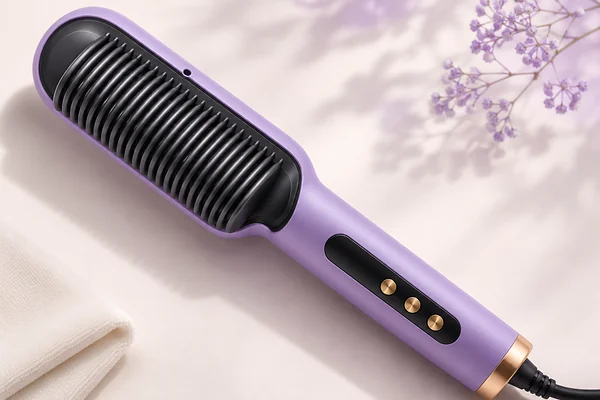
Loose hair should come away without force
Remove what releases easily from the cooled, unplugged brush. Do not use the teeth as a lever or drag a tightly wound strand across several rows.
If a cleaning accessory is provided, its presence alone does not explain how to use it. The instructions should identify the surfaces it can contact and the intended movement. A tool that reaches a gap is not necessarily suitable for scraping inside it.
For a brand reviewing a sample, this is a useful practical question: can a first-time user understand the cleaning method from the supplied guide, without someone demonstrating an improvised technique?
Surface residue needs a compatible wiping method
A visible mark might be loose debris, styling-product residue or a change in the surface itself. Appearance alone cannot always distinguish them.
Begin with the permitted gentle wiping method. If the mark remains, avoid scraping it with a fingernail, blade or metal pick. Repeated rubbing can also make it harder to tell whether you are removing residue or affecting the finish.
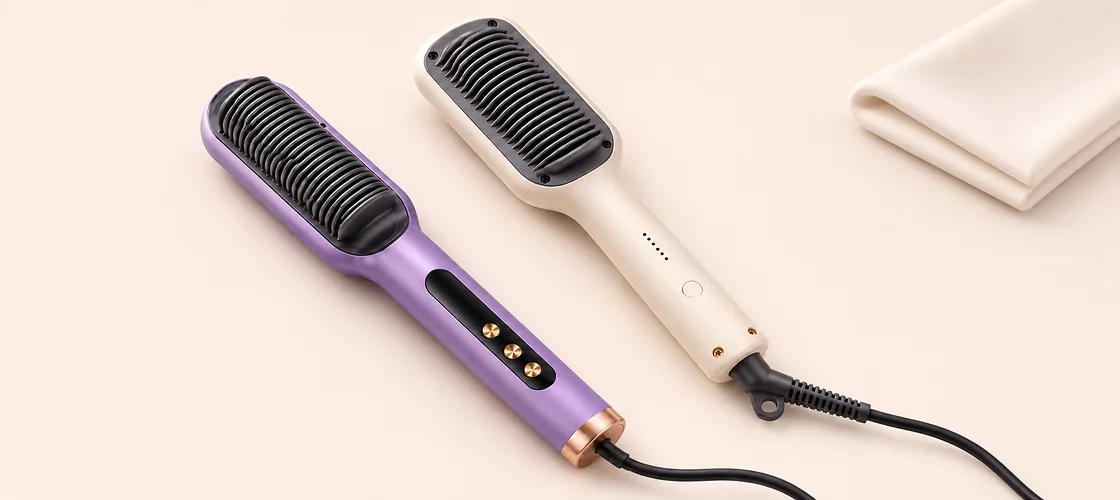
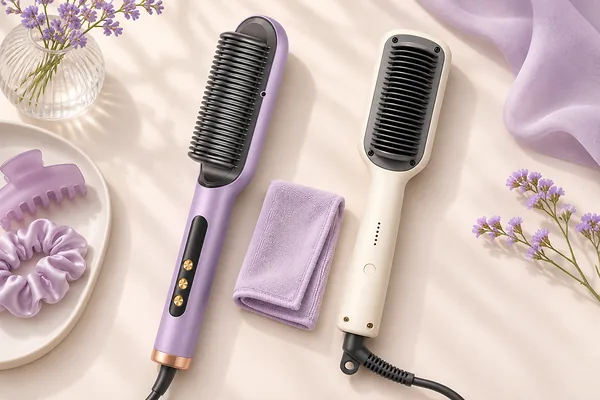
The KD380K ionic hair straightening and curling brush is a useful model reference because its product information and manual let buyers connect the visible comb structure with specific care instructions. Its ionic function does not replace physical cleaning or make the teeth self-cleaning.
Stop when the issue looks like damage
A loose tooth, a lifted surface, a crack or a part that moves unexpectedly is not a cleaning task. Leave it alone and seek support.
A clear photograph of the affected area is usually a better starting point for a service conversation than another attempt with a different cleaner. Include the model and explain what was used before the problem appeared.
Which Parts Need Different Care?
The brush head attracts most attention, but the handle and electrical connection also deserve a look. A practical care guide should show customers where routine wiping ends and where they should avoid introducing moisture or tools.
| Area | What to look for | Routine care boundary |
|---|---|---|
| Accessible comb teeth | Loose strands and surface residue | Remove only what releases easily; use the model-approved wiping method |
| Gaps around the teeth | Trapped hair or material below the accessible surface | Do not force tools into openings or remove fixed parts |
| Outer housing | Fingerprints and visible marks | Wipe as directed without abrasive scrubbing |
| Buttons and display area | Residue around edges | Avoid spraying liquid or pushing a wet cloth into gaps |
| Cord and cable entry | Cuts, deformation or unusual looseness | Inspect while unplugged; do not attempt a household repair |
| Plug | Damage, discoloration or moisture | Keep dry and refer damage for assessment |
The KD680 compact corded hair straightening brush offers another example of why illustrations should match the model. Its head, controls and overall format differ from KD380K. A care card showing the correct product is easier to follow than one generic drawing used across an entire range.
That does not mean one model is easier to clean. Such a comparison would require an agreed evaluation of the actual samples. For this article, the useful distinction is simply that cleaning access and instructions belong to the product being supplied.
Can You Use Water, Alcohol or Other Cleaners?
“Can I use water?” is often shorthand for several different questions. Wiping an allowed surface with a damp cloth, spraying the brush and rinsing it under a tap are different actions. The wording on a care card should make that distinction unmistakable.
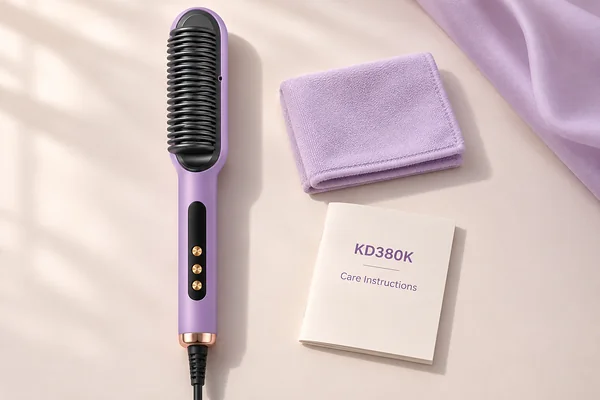
A permitted wipe does not mean the brush is washable
The KD380K and KD680 reference manuals reviewed for this guide prohibit soaking the appliance or flushing it directly under a tap. Both describe soft-cloth cleaning and warn against steel-wire brushes, abrasive cleaners and corrosive liquids such as gasoline or acetone.
Those instructions should not be shortened to “wash the brush.” A customer may reasonably interpret that as permission to put the head under running water.
When preparing retail copy, use the actual action: wipe the permitted surface according to the supplied instructions. Keep electrical openings, the cord connection and the plug out of any wet-cleaning routine.
For steam-equipped models, our guide to water and heat control in steam hair straightening brushes explains the tank, steam outlets and heating functions. A built-in water system does not make the appliance washable; its care requirements must come from the matching manual rather than these general surface-cleaning steps.
Alcohol permission must remain model-specific
The reviewed manual versions mention medical alcohol as a wiping option. That is not a universal recommendation for every straightening brush, coating or later product version.
They do not provide a basis for inventing an alcohol concentration, soaking time or disinfection claim. A retailer should therefore use the wording approved for the supplied model and ask for clarification where the cleaner or application method is unclear.
Never spray a flammable cleaner onto a hot or powered styling tool. Cleaning permission also does not authorize using the same substance during styling.
Avoid home-made cleaning recipes
Dishwashing liquid, shampoo, vinegar, baking soda and general-purpose disinfectants should not be added to the instructions simply because they are common household products.
If the approved method does not remove a deposit, ask the supplier how to proceed. That is more useful than offering a succession of stronger mixtures whose compatibility with the product has not been established.
What Should You Check Before Using the Brush Again?
The final check takes little time and can prevent a cleaning problem from being mistaken for a styling problem. Leave the appliance disconnected while looking it over.
Confirm that accessible areas are free of loose hair and cloth fibres, permitted wiped surfaces are fully dry, and the teeth and housing show no visible damage. Look at the cable entry and plug too.
If there are cracks, scorching, sparks or an unusual smell, stop using the appliance and seek assistance. Do not assume that more cleaning will solve the issue. Electrical Safety First gives similar advice on damage and abnormal operation in its guidance for hair straighteners and tongs. That general safety guidance supports the precaution; the product's own manual still determines its cleaning method.
For everyday storage, let the brush cool fully before placing it in a bag or enclosed space. Follow the cord-storage instructions and avoid creating tight bends or strain at the handle.
There is no need to invent a weekly deep-cleaning schedule for every customer. Encourage a brief inspection after use, once the tool is safe to handle, and deal with visible hair or residue using the permitted method. Any prescribed interval should come from the relevant instructions.
How Can Brands and Distributors Make Care Instructions Clearer?
A customer should not have to search through several pages to discover whether a brush can be rinsed. A short care card can put the essentials where they are easy to find, while the full manual retains the complete instructions and warnings.
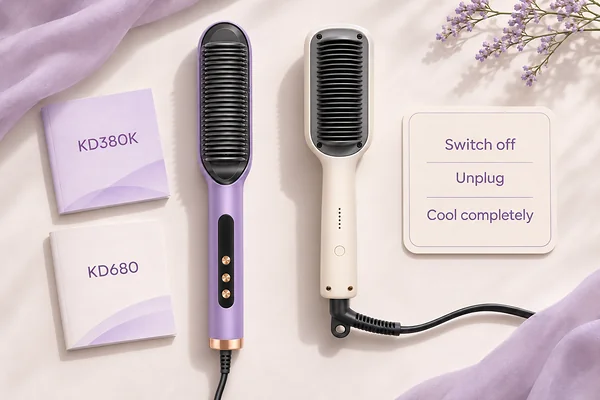
For importers, retailers and brands, the opportunity is straightforward: make the advice consistent wherever the customer encounters it. The box insert, product listing, demonstration and service reply should describe the same method for the same model.
Build a care card around the actual product
A useful card answers a small number of practical questions. This framework can help prepare one; it still needs approval against the supplied product and manual.
| Care-card item | What the customer needs to understand |
|---|---|
| Applicable model | Which brush the instructions cover |
| Before cleaning | How to disconnect the tool and allow it to cool |
| Loose-hair removal | What can be removed without force or disassembly |
| Wiping method | The permitted cloth, liquid and application method |
| Prohibited actions | Whether rinsing, immersion, abrasive tools or particular cleaners are forbidden |
| Before reuse | Dryness and visible-condition checks |
| Support route | Where to ask about trapped residue, damage or an unclear instruction |
Use a photograph or drawing of the correct brush. Keep essential warnings visible rather than relying entirely on a QR code. If the packaging includes a cleaning accessory, show its approved use and confirm that it is included in that particular order.
Translation deserves the same attention as the original text. “Wipe with a damp cloth” should not become “wash with water,” and an optional method should not turn into an instruction to use it every day.
Demonstrate the method customers will actually follow
A store or distributor demonstration can use an unplugged, fully cooled sample to show the accessible surfaces and the care sequence. It should follow the supplied instructions, including the choice of any cleaning accessory.
Do not demonstrate a shortcut that contradicts the card inside the box. Likewise, home-use care instructions should not be presented as a validated salon disinfection procedure. Shared-use requirements need their own assessment.
For customer-service replies, start with the model, the affected area and what the customer has already tried. If damage, liquid ingress or abnormal electrical behavior is reported, move the conversation toward service support rather than continued cleaning.
How Does K·SKIN Global Support a Better-Prepared Product Launch?
Care information fits naturally into sample and order preparation. It is easier to identify an unclear instruction while reviewing a product than after different versions have reached stores, online listings and support teams.
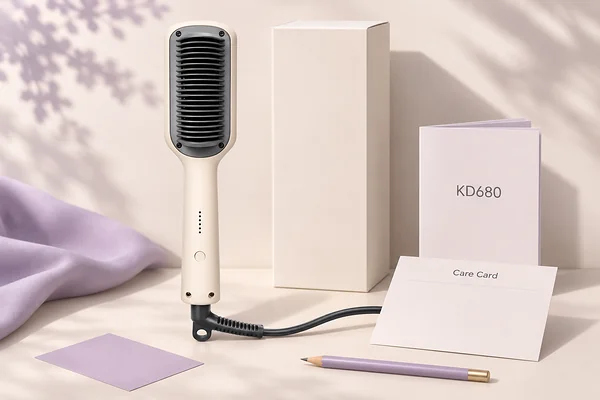
K·SKIN Global's hair straightener brush supply and project options connect model selection with sample review, product documents and the proposed commercial configuration. KD380K and KD680 provide concrete starting points for that discussion.
For an established-model order, bring the sample, matching manual and proposed customer-facing care text into the same review. For private label, manual language and packaging adaptation can be discussed alongside the selected configuration; available changes remain subject to project review.
Before approving the care material, a buyer can:
- Match the model and manual revision to the proposed order.
- Identify the permitted cleaning method and unresolved wording.
- Confirm whether any cleaning accessory is included.
- Check that the product listing, insert and support reply agree.
- Provide a clear contact route for problems routine care cannot resolve.
This keeps the discussion useful for bulk buyers and distributors as well as private-label brands. The goal is a product customers can maintain with confidence, supported by instructions that describe what they actually receive.
Frequently Asked Questions
Can I use an ordinary toothbrush to clean between the teeth?
Do not assume it is suitable. Bristle stiffness, access and the surfaces it may contact matter. Use an accessory or method approved for the model rather than choosing a tool simply because it fits the gap.
Can I clean the brush while it is still warm to loosen residue?
Allow it to cool completely before routine cleaning. Do not switch it on to soften a deposit or apply cleaner while it is hot. Ask for model-specific advice if the permitted method does not remove the residue.
Does an ionic straightening brush need a different cleaning liquid?
An ionic feature does not establish which liquid is compatible with the housing or comb surfaces. Follow the model's care instructions, and do not probe any ion outlet or opening.
How often should a hair straightening brush be cleaned?
Follow any interval in the supplied manual. Otherwise, inspect the cooled tool regularly and address visible hair or residue with the approved method. Avoid presenting an arbitrary weekly treatment as a requirement for every model.
Does routine cleaning disinfect a brush for use on different people?
No disinfection claim follows from ordinary cleaning instructions alone. Products intended for personal use should not be presented as suitable for shared professional use without the relevant product and hygiene requirements being assessed.
Conclusion
Good hair straightening brush care starts with a simple sequence: disconnect, cool, remove accessible hair gently, wipe only as instructed and check the tool before using it again. When residue resists the approved method or a part looks damaged, the next step is support—not more force or a stronger cleaner.
For brands and distributors, clear care information is part of a well-prepared product offer. When discussing a KD380K or KD680 project with K·SKIN Global, review the sample and matching instructions together so the product page, packaging and customer-service advice all tell the same useful story.
🌐 Website: kskinglobal.com
✉️ Email: info@kskinglobal.com